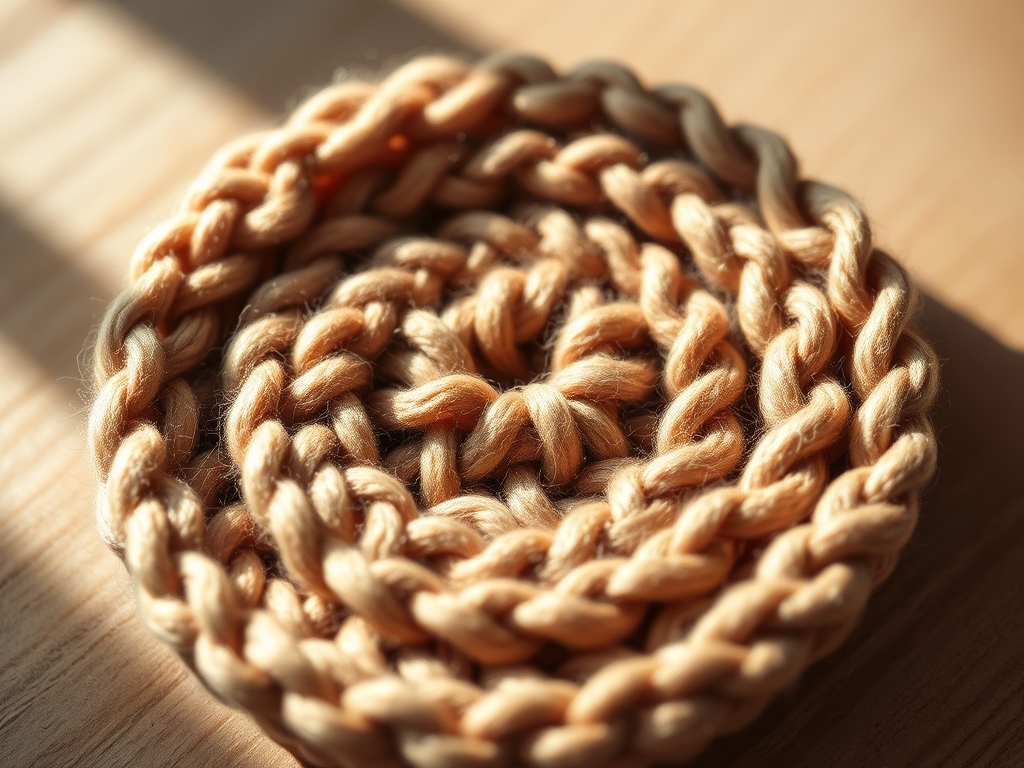
Grab your favorite mug and clear some table space because we are diving deep into the tactile magic of fiber physics. Imagine the sensation of raw, organic wool sliding through your fingers; it is not just soft; it is a complex protein structure with microscopic scales that lock together under tension. When you join Rhythmic Knitting Circles, you are engaging in a high-frequency synchronization of motor skills and social resonance. We are talking about the literal rewiring of your nervous system through the repetitive, mechanical action of the purl and the knit. The friction of the yarn against the needle creates a specific haptic feedback loop that grounds your focus. Within these circles, the collective hum of needles acts as a metronome for the mind. It is a sensory symphony where the tensile strength of the fiber meets the fluid motion of your hands. We are not just making sweaters; we are constructing a sanctuary of structural integrity and emotional resilience through every deliberate loop and pull.
THE STUDIO KIT
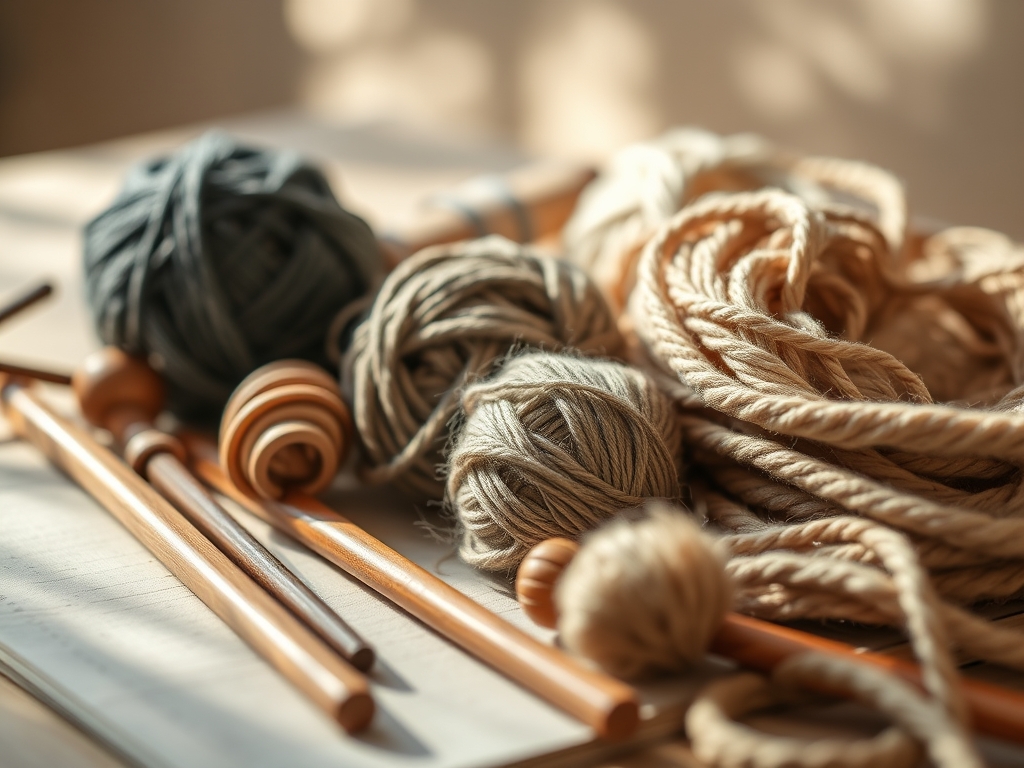
To master the art of the circle, you need a kit that respects the physics of the craft. Your primary tool is the circular needle, preferably made of high-grade stainless steel or carbon fiber to minimize surface drag. Steel needles offer a lower coefficient of friction, allowing for faster transitions between stitches. You will also need a digital caliper to measure your yarn diameter with precision; knowing your exact millimeter thickness ensures your gauge remains consistent across long sessions.
For the fiber, seek out high-twist worsted wool. The high twist count increases the tensile strength of the yarn, preventing pilling and ensuring the finished garment maintains its shape under gravitational stress. You should also keep a bone folder in your kit; while traditionally a bookbinding tool, it is perfect for crisping the edges of your pattern charts or flattening stubborn seams.
Material Substitutions: If animal fibers are not an option, look for mercerized cotton. The mercerization process involves treating the cotton with sodium hydroxide to swell the fibers, increasing their luster and affinity for dye while significantly boosting their bursting strength. Avoid low-quality acrylics which lack the "memory" of natural fibers, meaning they will not return to their original shape after being stretched.
THE TEMPO
The "Maker's Rhythm" is a state of flow where time dilation occurs. In a professional studio setting, we break this down into three distinct phases. Phase one is the Calibration Phase (approx. 1 hour), where you swatch and wash your sample to calculate the shrinkage coefficient. You cannot skip this; the physics of moisture absorption in porous fibers means your piece will change size once it hits water.
Phase two is the Momentum Phase (10 to 40 hours depending on scale), where the rhythmic knitting circles provide the social pacing. Here, the "tempo" is set by the most experienced knitter in the group, creating a biological entrainment where heart rates often synchronize. Finally, phase three is the Finishing Phase (3 hours), involving the blocking of the fabric. This is where you use steam to relax the hydrogen bonds in the fibers, setting them into their final, permanent geometry.
THE CORE METHOD
1. Establishing the Foundation Chain
Your project begins with the cast-on, which sets the initial load-bearing capacity of the edge. Use a long-tail cast-on for maximum elasticity. By leaving a tail three times the width of your project, you ensure enough slack to prevent the edge from snapping under tension.
Mastery Tip: The science of surface tension applies here. If you pull the yarn too tight, you compress the air pockets within the fiber, destroying the insulation properties of the wool. Keep a loose, even grip to maintain the yarn's "loft."
2. Maintaining Gauge Consistency
As you move into the body of the work, your primary goal is maintaining a consistent stitch density. Use your calipers every ten rows to check that your stitches per inch have not drifted. Even a 0.5mm deviation can cause the garment to warp or lean to one side.
Mastery Tip: This is about structural integrity. A consistent gauge ensures that the weight of the garment is distributed evenly across all loops, preventing "stress fractures" or holes from forming in the fabric over time.
3. Executing the Rhythmic Turn
When working in circles, the transition between rows is a critical point of potential weakness. Use a stitch marker to denote the start of the round. Ensure the "laddering" effect is avoided by tightening the first two stitches of every new needle transition.
Mastery Tip: This involves capillary action. If the stitches are too loose at the transition points, moisture and oils from your hands will pool in the gaps, leading to localized degradation of the fiber over time.
4. Managing Fiber Friction
As the piece grows, the weight of the hanging fabric creates downward pull. Support the project on your lap to prevent the weight from stretching the active stitches on the needles.
Mastery Tip: This is a lesson in gravity and elasticity. Constant downward tension on the needles can permanently deform the stitch shape, a process known as "creep" in materials science. Supporting the weight preserves the original dimensions.
5. The Secure Bind-Off
The final row must be secured using a method that matches the elasticity of the cast-on. A "sewn bind-off" using a tapestry needle provides a flexible finish that mimics the natural stretch of the knit fabric.
Mastery Tip: By threading the yarn through the loops in a figure-eight pattern, you create a mechanical interlock that is significantly stronger than a standard chain bind-off, ensuring the edge won't fray under heavy use.
6. Blocking for Dimensional Stability
Once off the needles, submerge the piece in lukewarm water. This allows the fibers to reach their equilibrium moisture content. Pin the garment to a foam board using T-pins, stretching it to the exact dimensions required by your pattern.
Mastery Tip: As the water evaporates, the fibers undergo a "thermal set." The hydrogen bonds reform in the new, stretched position, effectively "locking" the design into place and smoothing out any minor stitch irregularities.
THE TECHNICAL LEDGER
Maintenance & Longevity: To preserve the protein structure of wool, never use agitation or high heat. Store your finished pieces flat. Hanging a knit garment causes longitudinal stress, which will eventually lead to permanent deformation of the shoulder seams.
Material Variations:
- Sustainable: Tencel (lyocell) offers incredible drape and is biodegradable.
- Recycled: Reclaimed cashmere provides high thermal resistance with a lower carbon footprint.
- Premium: Qiviut (muskox wool) is eight times warmer than sheep wool and does not shrink in water.
The Correction:
- Dropped Stitch: Use a crochet hook to "ladder" the stitch back up. This restores the interlooping sequence without unraveling the whole row.
- Split Yarn: If your needle pierces the ply, back out immediately. A split ply reduces the cross-sectional area of the yarn, creating a weak point that will eventually snap.
- Row Counting Error: Use a specialized "row counter" tool. Relying on memory is prone to "cognitive drift," which leads to asymmetrical garments.
Studio Organization: Store your yarn in airtight, UV-protected bins. Sunlight triggers photodegradation, which breaks down the chemical bonds in the dye and the fiber itself, leading to brittleness and fading.
THE FINAL REVEAL
Look at that! You have successfully navigated the complex physics of fiber manipulation. Your finished piece is not just a garment; it is a testament to precision engineering and the power of Rhythmic Knitting Circles. The drape is perfect, the gauge is mathematically consistent, and the structural integrity is top-tier. You have transformed a single, linear strand of protein fiber into a complex, three-dimensional matrix. This is high-energy crafting at its finest; functional, beautiful, and scientifically sound.
STUDIO QUESTIONS
What is the main benefit of rhythmic knitting for the brain?
Rhythmic knitting induces a "relaxation response" by lowering cortisol levels. The repetitive bilateral motion synchronizes brain hemispheres, creating a meditative state that improves cognitive function and reduces the physiological markers of stress and anxiety.
How does knitting in a circle improve the outcome?
Knitting circles provide "social entrainment," where the group's collective rhythm helps individuals maintain a consistent tempo. This leads to better gauge accuracy and reduces the likelihood of "tension drift" caused by individual fatigue or distraction.
Why is material choice important for wellness?
Natural fibers like wool and silk are "breathable" and help regulate body temperature through moisture-wicking properties. Avoiding synthetic fibers prevents skin irritation and ensures the tactile experience remains soothing rather than abrasive to the nervous system.
What tool is best for fixing mistakes in a circle?
A small crochet hook is the essential "recovery tool" for any knitting circle. It allows you to mechanically re-link dropped stitches through the existing fabric matrix without needing to deconstruct the entire project or lose your rhythmic flow.