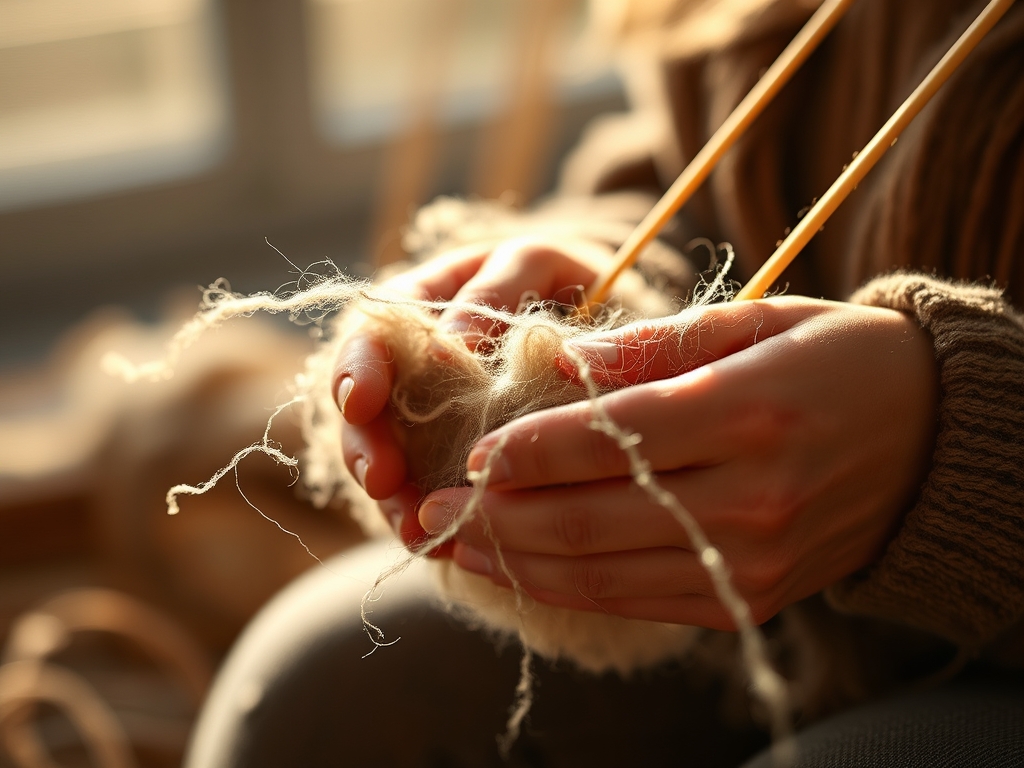
The smell of raw, lanolin-rich wool is the first thing that hits you when you enter the studio; it is earthy, heavy, and full of potential energy. You reach out and touch the roving, feeling the individual scales of the sheep's wool as they catch against your fingertips. This is where the magic of physics meets the art of creation. To master Rhythmic Hand Spinning, you have to understand that you are not just twisting hair; you are managing a complex system of friction, torque, and tensile strength. When the spindle drops, gravity becomes your primary collaborator. It pulls the fibers downward while your fingers control the rate of twist, creating a delicate balance between the weight of the whorl and the integrity of the drafting zone. If the rhythm is off, the yarn snaps or bunches into slubs. But when you find that sweet spot where the rotation is consistent and the drafting is fluid, the process becomes hypnotic. We are going to dive deep into the mechanics of the drop spindle to ensure your yarn flow is flawless.
THE STUDIO KIT
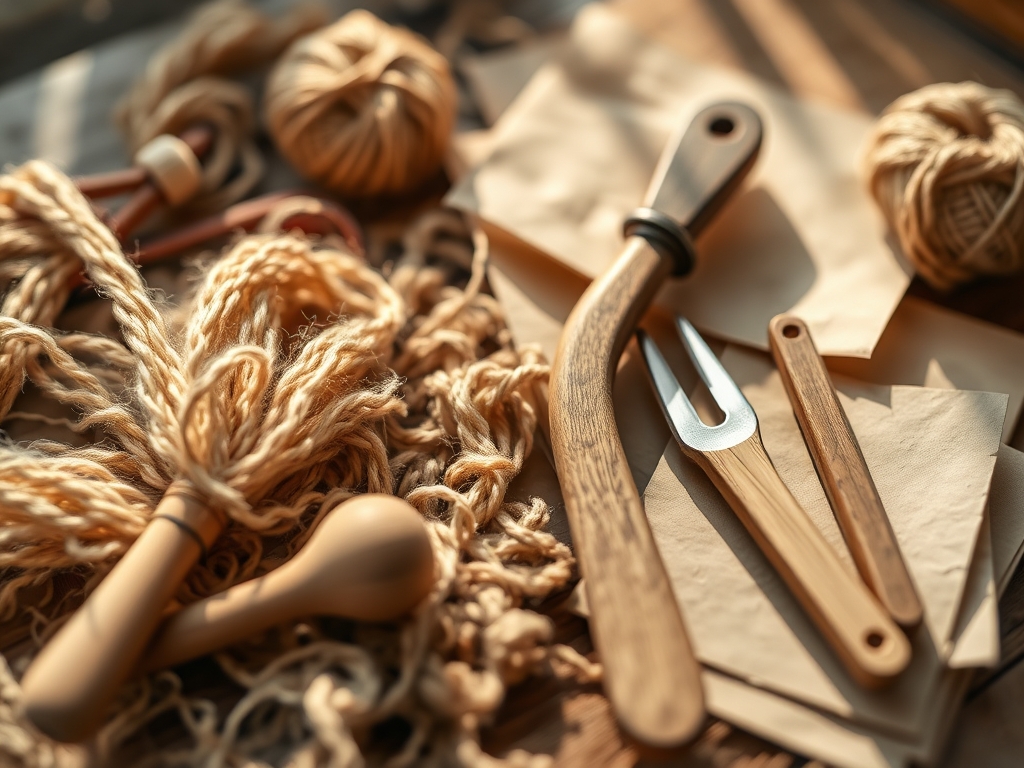
To achieve professional results, your toolkit must be precise. Start with a top-whorl drop spindle featuring a high-density wooden whorl; maple or cherry are ideal because their tight grain patterns provide a balanced center of gravity. You will need a pair of digital calipers to measure the diameter of your yarn consistently as you work. A steel crochet hook (size 1.0mm) is essential for retrieving lost ends or fixing snags in the fiber supply. For fiber preparation, use hand carders with fine wire teeth to align the staples.
Material Substitutions: If you cannot find raw roving, you can use recycled silk sari strips or even shredded bamboo fiber. However, keep in mind that silk has a much lower friction coefficient than wool, meaning it requires more twist per inch to maintain its structural integrity. For a budget spindle, a heavy wooden toy wheel and a poplar dowel can be assembled using a drill press to ensure the shaft is perfectly perpendicular to the whorl.
THE TEMPO
The Maker's Rhythm is not just about speed; it is about the interval between the flick of the wrist and the pinch of the fiber. Expect to spend approximately twenty minutes on fiber preparation, ensuring all tangles are removed to prevent sudden tension spikes. The initial drafting phase takes about thirty minutes of focused calibration to find the right gauge for your project. Once you establish your tempo, you can expect to spin roughly fifty yards of single-ply yarn per hour. This cadence allows the kinetic energy of the spindle to dissipate slowly, preventing the "over-twist" that makes yarn kink and curl.
THE CORE METHOD
1. The Leader Attachment
Secure a piece of pre-spun yarn to the shaft using a clove hitch knot. This provides the initial anchor for your unspun fiber. Ensure the leader is at least twelve inches long to allow for a smooth transition.
Mastery Tip: This step relies on mechanical friction. By using a textured wool leader against a smooth wooden shaft, you create enough surface grip to prevent the spindle from slipping during the initial high-torque rotation.
2. The Park and Draft Technique
Hold the spindle between your knees to stabilize it while you draft a small section of fiber. Once the fiber is thin enough, give the spindle a sharp flick and let the twist travel up into the drafted zone.
Mastery Tip: This manages the tensile load on the fiber. By parking the spindle, you remove the variable of gravity, allowing you to focus entirely on the distribution of the twist across the staple length.
3. Managing the Drafting Zone
Your "fiber hand" holds the supply while your "spinning hand" manages the twist. Keep your hands roughly six inches apart to allow the fibers to slide past one another without breaking.
Mastery Tip: This is an exercise in fluid dynamics. The fibers must move like a liquid; if you grip too tightly, you increase the static friction, which causes the yarn to "choke" and snap under its own weight.
4. The Butterfly Wind
Once you have spun a length of yarn, wrap it around your hand in a figure-eight pattern before winding it onto the spindle shaft. This prevents the yarn from tangling and keeps the weight centered.
Mastery Tip: The figure-eight wrap utilizes centripetal force during the winding process to keep the yarn taut, ensuring that the package on the spindle remains dense and balanced for the next rotation.
5. Controlling the Torsion
As the spindle fills, its weight increases, which changes the amount of force pulling on your drafted fiber. You must adjust your drafting speed to compensate for this increased moment of inertia.
Mastery Tip: A heavier spindle spins longer but slower. To maintain a consistent yarn diameter, you must decrease the amount of fiber in the drafting zone as the spindle gains mass to prevent the yarn from becoming too thick.
6. The Finishing Soak
Once the spindle is full, wind the yarn into a skein and soak it in lukewarm water with a drop of pH-neutral soap. This "sets" the twist and allows the fibers to relax into their new shape.
Mastery Tip: This process involves hydrogen bonding. The water breaks the temporary bonds between the protein fibers, and as the yarn dries, the bonds reform in the twisted position, permanently locking the rhythmic flow into the structure.
THE TECHNICAL LEDGER
Maintenance & Longevity: Keep your spindle shaft smooth by occasionally rubbing it with a fine-grit sandpaper (400 grit or higher) followed by a light coat of beeswax. This prevents the wood from snagging the delicate fibers.
Material Variations: For a premium experience, try Merino-Silk blends. The Merino provides the "tooth" needed for easy spinning, while the silk adds a lustrous sheen and increased tensile strength. For a sustainable option, look for tencel, which is made from wood pulp and mimics the drape of silk.
The Correction:
- The Snap: If the yarn breaks, the twist is too low for the weight of the spindle. Fix: Use a lighter spindle or increase the RPM.
- The Slub: Thick spots occur when drafting is uneven. Fix: Use an oscillating motion with your fingers to pull the fibers apart more gently.
- The Back-Spin: If the spindle reverses, you lose your energy. Fix: Use your thumb to "brake" the whorl before it stops completely to maintain directional momentum.
Studio Organization: Store your spun yarn in a breathable cotton bag. Never use plastic, as it traps moisture and can lead to mildew or fiber degradation. Keep spindles upright in a weighted rack to prevent the shafts from warping over time.
THE FINAL REVEAL
There is nothing quite like the sight of a perfectly balanced skein of hand-spun yarn. When you hold it, you can feel the energy you put into every rotation. The yarn should have a consistent "bloom" and a soft, rhythmic bounce when tugged. This is not just a craft project; it is a physical record of your focus and movement. Whether you use this yarn for a high-end knitting project or display it as a work of art, you have successfully mastered the physics of the drop spindle.
STUDIO QUESTIONS
Why does my yarn keep breaking?
The yarn breaks because the tensile strength of the drafted fiber cannot support the weight of the spindle. This usually happens when there is insufficient twist. Increase your rotation speed or draft slightly thicker sections to compensate for the spindle's mass.
How do I stop the spindle from wobbling?
Wobbling is caused by an off-center center of gravity. Ensure your yarn is wound evenly around the shaft, close to the whorl. If the spindle itself is warped, use a lathe or sandpaper to re-balance the wooden disc.
What is the best fiber for beginners?
Corriedale wool is the gold standard for beginners. It has a medium staple length and a high "crimp," which creates natural friction. This makes it much easier to control the drafting speed compared to slippery fibers like silk or alpaca.
How do I remove the "kinks" from my yarn?
Kinks are caused by latent torsion. To fix this, you must "set the twist" by submerging the skein in warm water and hanging it to dry with a light weight attached to the bottom to straighten the fibers.