
Grab your safety goggles and clear the workbench because we are about to dive into the most grounding experience your hands will ever encounter. There is something primal about the resistance of rock; it is not like wood that yields to a blade or clay that submits to a thumb. When you engage in Meditative Stone Carving, you are negotiating with deep time. It is a tactile conversation between your nervous system and the mineral structure of the earth. Can you feel that? The cool, heavy weight of a limestone block waiting for your mark is pure potential energy. We are not just hacking away at a rock; we are using physics to liberate form from a rigid, crystalline matrix. Every strike of the mallet sends a shockwave through the tool steel, vibrating right into your palms. It is loud, it is dusty, and it is the most centering thing you will do all week. Let's get your studio space ready for some serious, high-vibe lithic art.
THE STUDIO KIT
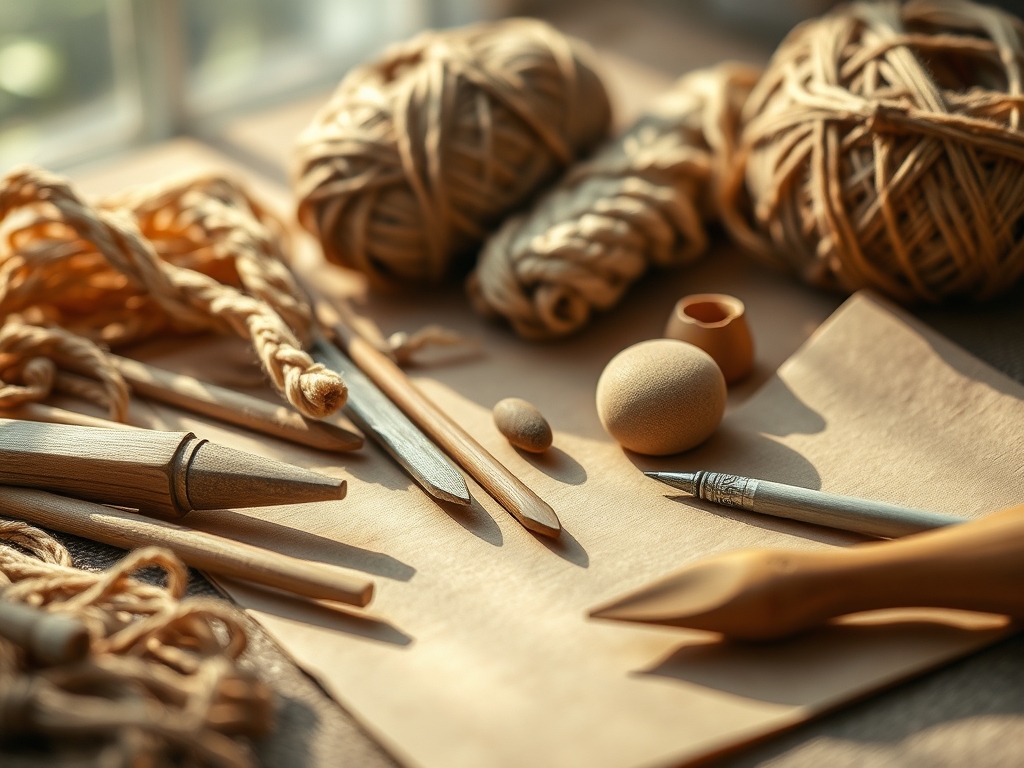
To master the art of the letter, you need a kit that respects the tensile strength of your medium. We are looking for tools that can withstand the compressive stress of repeated impact without fracturing. Your primary arsenal includes five specific chisels: the point, the tooth chisel, the flat chisel, the rondel, and the specialized lettering chisel. You will also need a dummy (a soft-headed zinc or lead mallet) to provide a dampened strike that protects your wrists from repetitive strain. For the stone, start with Indiana limestone or Italian Carrara marble; these possess a fine grain density that allows for crisp, sharp edges without excessive "plucking" or crumbling.
If you cannot source premium marble, look for Material Substitutions like high-density aerated concrete or even large, smooth river stones. Just keep in mind that river stones are often igneous and have a high Mohs hardness scale rating, which might dull your carbon steel tools faster than sedimentary rocks. You will also need calipers for precise measurement of your letter heights and a carbide-tipped scriber to etch your initial layout into the stone surface. Always keep a soft brush nearby to clear the "frass" or stone dust; if you leave it on the surface, it acts as a lubricant and causes your chisel to slip.
THE TEMPO
The "Maker's Rhythm" in stone carving is dictated by the acoustic feedback of the material. You cannot rush a rock. Phase one is the Layout, which takes about sixty minutes of intense focus to ensure your typography follows the natural bedding planes of the stone. Phase two is the Roughing Out, a high-energy stage that can last three to five hours depending on the depth of your relief. This is where you find your flow state, syncing your breathing with the rhythmic tink-tink-tink of the mallet.
Phase three is the Refinement, where the tempo slows down significantly. This is the heart of Meditative Stone Carving. You might spend two hours just perfecting the serif on a single letter. Finally, the Finishing phase involves light burnishing or sanding, which takes about an hour. Total project time ranges from eight to twelve hours. Remember, the stone has been around for millions of years; it is in no hurry, and neither should you be.
THE CORE METHOD
1. Mapping the Lithic Surface
Begin by cleaning your stone slab with a dry brush to reveal any hidden fissures or "vents" that could cause a structural failure later. Use your calipers to mark the top and bottom bounds of your text. Draw your letters using a soft lead pencil first, then lock them in with a carbide-tipped scriber. This ensures your lines do not disappear under a layer of dust.
Mastery Tip: Understand the cleavage planes. Every stone has a direction in which it splits most easily. By scribing your lines first, you create a microscopic "score" that encourages the stone to fracture exactly where you want it to, rather than following a random internal fault line.
2. The Point Chisel Rough-In
Hold your point chisel at a sixty-degree angle to the surface. Use light, rapid taps to remove the bulk of the material around your letters. You are looking to create a "trench" that defines the silhouette. Do not try to go deep all at once; stone responds best to incremental stress loading.
Mastery Tip: This is all about kinetic energy transfer. If your angle is too steep (ninety degrees), you will "stun" the stone, creating white bruises that go deep into the material. Keeping a shallower angle allows the energy to move across the surface, shearing off flakes rather than crushing the internal structure.
3. Leveling with the Tooth Chisel
Once the rough shape is visible, switch to the tooth (or claw) chisel. This tool has multiple small points that distribute the force of the mallet strike. Drag it across the high spots to level the background of your carving. It leaves a beautiful, textured finish that contrasts perfectly with the smooth letters.
Mastery Tip: The tooth chisel works on the principle of point pressure. By dividing the strike force across four or five teeth, you reduce the risk of a single deep fracture. This tool is essential for maintaining the structural integrity of thin letter strokes.
4. Defining the Walls
Now, grab your flat chisel. This is where the magic happens. Position the blade on the edge of your letter and strike firmly. The flat edge shears away the ridges left by the tooth chisel, creating a crisp, vertical wall. Work from the outside in toward the center of your letter to prevent "blowing out" the edges.
Mastery Tip: Observe the acoustic pitch of your strikes. A high-pitched "ring" means the stone is solid. A dull "thud" suggests you are hitting a soft spot or a hidden crack. Adjust your force accordingly to prevent the stone from splitting unexpectedly.
5. The Lettering Detail
The final tool is the small, highly sharpened lettering chisel. This is for the "V-cut" grooves. Hold the chisel at a consistent forty-five-degree angle into the center of the stroke. Meet the cuts from both sides to create a perfect valley. This creates shadows that make the art legible even in low light.
Mastery Tip: Use capillary action to your advantage during cleanup. If you apply a tiny drop of water to a stubborn bit of dust in a deep V-cut, the surface tension will help lift the particles so you can blow them away with a straw, keeping your workspace pristine.
THE TECHNICAL LEDGER
Maintenance & Longevity
Your chisels are high-carbon steel and will dull. Use a bench grinder or a diamond sharpening stone to maintain a twenty-five-degree bevel. To prevent oxidation, wipe your tools with a thin layer of machine oil after every session. Store them in a tool roll made of heavy canvas to prevent the edges from clanking together.
Material Variations
- Sustainable: Reclaim offcuts from local tombstone carvers or countertop installers.
- Premium: Belgian Black Marble offers a high-contrast finish but requires diamond-tipped tools.
- Recycled: Old slate roofing tiles are perfect for thin, delicate letter art and require very little force.
The Correction
- The Mistake: A large chunk of the letter "pops" off (plucking).
- The Fix: Use a two-part stone epoxy mixed with stone dust from your scrap pile to "weld" the piece back on.
- The Mistake: The chisel keeps slipping and scratching the finished surface.
- The Fix: Your angle is too shallow. Increase the angle and ensure you are hitting the "sweet spot" of the mallet.
- The Mistake: The stone cracks in half.
- The Fix: This usually happens due to internal "vents." Always tap the stone before starting; if it doesn't ring like a bell, find a new piece.
Studio Organization
Store your stone slabs vertically on a wooden rack to prevent flexural stress. Never store them on a concrete floor, as they can wick up moisture, leading to salt efflorescence or freeze-thaw damage if your studio isn't climate-controlled. Keep your mallet and chisels in a dry, elevated drawer.
THE FINAL REVEAL
Look at that! You have successfully turned a silent, stubborn block of mineral into a piece of vocal art. The shadows in those V-cuts are sharp enough to cut glass, and the texture of the background provides a rhythmic, organic counterpoint to the precision of your typography. Your hands might be tired, but your mind should be as clear as a mountain stream. This piece isn't just decoration; it is a physical record of your focus and patience. You have mastered the physics of the strike and the soul of the stone.
STUDIO QUESTIONS
What is the best stone for beginners?
Indiana limestone is the gold standard for beginners. It has a consistent, non-directional grain and a medium Mohs hardness, making it easy to carve while still holding sharp, crisp details for complex lettering projects.
How do I stop my hands from vibrating?
Use a zinc or lead-headed dummy mallet rather than a wooden one. The metal head absorbs the shock of the impact, preventing the vibration from traveling up the chisel and into your joints, which reduces fatigue.
Can I carve stone with wood chisels?
Absolutely not. Wood chisels are beveled for shearing fibers and will shatter instantly against stone. Stone chisels are tempered differently and have a thicker gauge to handle the intense compressive forces of lithic carving.
How do I sharpen my stone chisels?
Use a high-speed bench grinder for major reshaping or a diamond grit whetstone for fine honing. Always maintain a consistent bevel angle and dip the tool in water frequently to prevent losing the steel's temper.