Grab your favorite ceramic bowl and clear the clutter because we are about to dive into the visceral, fluid world of the Meditative Ink Wash. There is a specific, heart-thumping thrill that happens the moment your brush touches a dry sheet of raw Xuan paper. You can actually hear the fibers thirsty for the pigment. It is a game of high-stakes physics where the capillary action of the paper determines whether your mountain peak looks like a majestic summit or a soggy blotch. We are not just painting; we are manipulating the surface tension of water to create an entire atmosphere. When you master the seven tonal values, you are essentially learning how to control the light of a thousand suns using nothing but carbon and hydration. It is rhythmic, it is technical, and honestly, it is the ultimate brain-reset. We are going to harness the porous nature of handmade paper to build a landscape that breathes. Let us get your hands messy and your mind sharp.
THE STUDIO KIT
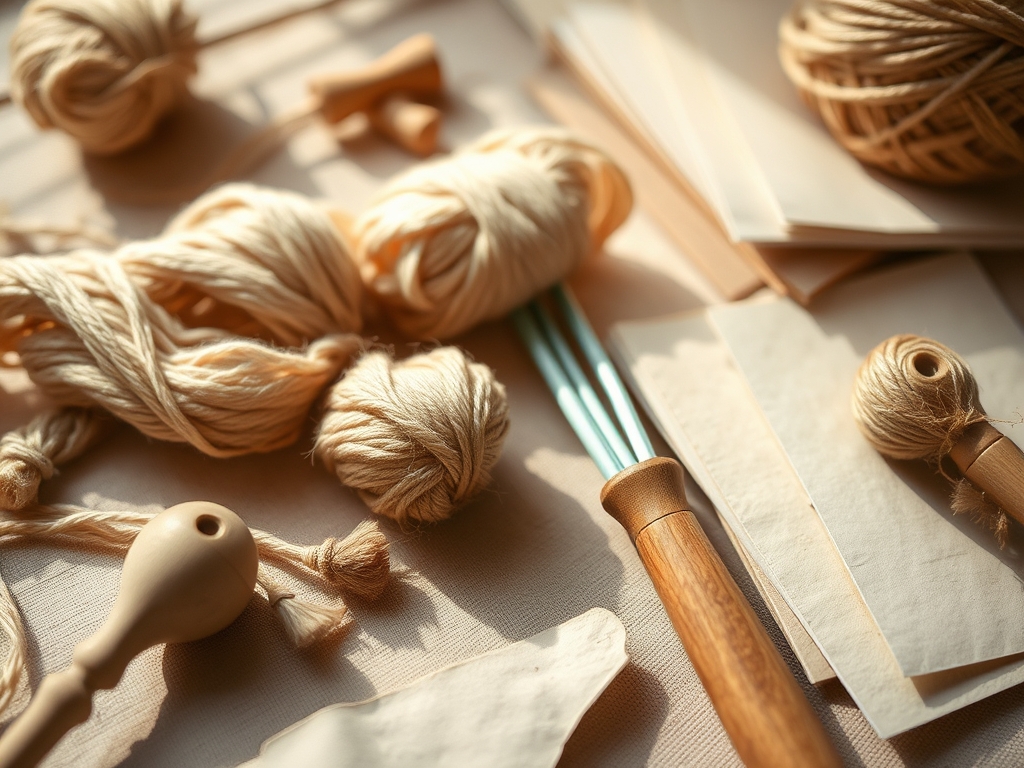
To execute a professional-grade wash, you need tools that respect the **tensile strength** of your substrate. Your primary weapon is the ink stick, traditionally made of pine soot and glue. When you grind this stick against a slate ink stone, you are creating a **colloidal suspension** of carbon particles. You will also need a series of bamboo-handled brushes with varying **bristle elasticity**. Look for wolf hair for sharp, structural lines and goat hair for soft, water-heavy washes.
Your paper choice is critical. Raw Xuan paper has high absorbency, while sized paper uses alum to restrict the flow. For this project, we want the raw variety to allow for maximum pigment diffusion. You should also have a bone folder on hand to crisp up your edges if you decide to mount the work later.
Material Substitutions: If you cannot source a traditional ink stone, a heavy ceramic plate works, though it lacks the microscopic tooth needed for a perfect grind. Instead of Xuan paper, a high-grammage cold-press watercolor paper can work, but you will lose the specific "bleed" characteristic of the Meditative Ink Wash. You can also use a rotary cutter to trim your edges if you prefer a modern, sharp finish over the traditional torn edge.
THE TEMPO
The Maker's Rhythm for an ink wash is divided into three distinct phases. First is the Prep Phase (15 minutes), where you grind your ink. This is a mechanical, repetitive motion that stabilizes your heart rate and prepares the carbon. Second is the Execution Phase (30 to 45 minutes). This must be done in a single flow state because the evaporation rate of the water dictates your blending windows. If the paper dries too fast, you get harsh lines instead of soft gradients. Finally, the Curing Phase (24 hours) allows the organic glues in the ink to fully bond with the cellulose fibers. Do not rush the drying; the structural integrity of the paper is most vulnerable when damp.
THE CORE METHOD
1. Grinding the Midnight
Start by adding a few drops of distilled water to your stone. Hold the ink stick at a perfect 90-degree angle and move in slow, circular motions. This is where you create your "Mother Ink," the darkest of your seven tones. The viscosity should be similar to heavy cream.
Mastery Tip: The friction between the stone and the stick generates a tiny amount of heat which helps the carbon particles disperse evenly. If you grind too fast, you introduce air bubbles that will break the surface tension on your paper later.
2. Calibrating the Seven Tones
Line up seven small ceramic wells. In the first, put pure ink. In the seventh, put pure water. In the middle five, use a calibrated dropper to mix varying ratios of ink and water. This creates a logical progression of tonal values.
Mastery Tip: Always test your tones on a scrap piece of the same ply paper. Ink always appears one shade lighter once the water evaporates and the fibers contract.
3. The Distant Peak Wash
Dip your largest goat hair brush into your lightest grey (tone six). Using a horizontal sweeping motion, lay down the furthest mountain range. The osmotic pressure will pull the ink into the paper.
Mastery Tip: Tilt your drawing board at a 5-degree angle. This uses gravity to pull the pigment toward the bottom of the stroke, creating a natural mist effect at the base of your mountains.
4. Mid-Ground Definition
Switch to a medium-sized brush and tone four. While the first layer is still slightly damp, add the secondary peaks. This creates a "soft edge" where the layers meet, simulating atmospheric perspective.
Mastery Tip: This technique relies on wet-on-wet diffusion. If the first layer is too dry, the new ink will sit on top; if it is too wet, the layers will lose all definition.
5. Structural Bone Strokes
Using your wolf hair brush and tone two, add the "bones" of the landscape. These are the jagged cliffs and ridges. Use a dry-brush technique where you wipe excess moisture onto a lint-free cloth first.
Mastery Tip: The high bristle elasticity of wolf hair allows you to apply "broken ink" effects. The gaps in the stroke occur because the ink cannot bridge the tiny valleys in the paper's texture.
6. The Midnight Accent
Use your pure "Mother Ink" (tone one) for the final details: a lone pine tree or a sharp rock face in the foreground. This provides the visual anchor for the entire piece.
Mastery Tip: Because this ink is the most concentrated, it has the highest solute density. It will stay exactly where you put it, provided your paper is not oversaturated.
7. Burnishing and Finishing
Once the piece is bone dry, use a bone folder or a smooth stone to lightly burnish the back of the paper. This flattens the fibers that may have buckled during the wetting process.
Mastery Tip: Burnishing realigns the cellulose chains, giving the paper a subtle sheen and increasing its tensile strength for framing.
THE TECHNICAL LEDGER
To ensure your Meditative Ink Wash lasts for decades, you must manage the acid-base balance of your environment. Traditional ink is alkaline, which helps preserve the paper, but cheap wood-pulp papers are acidic and will yellow over time. Always use 100 percent cotton or mulberry fibers.
Material Variations:
- Sustainable: Use soot collected from vegetable oil lamps for a vegan-friendly ink.
- Premium: Incorporate "Blueish" ink sticks which contain ground lapis lazuli for a cooler tonal range.
- Recycled: You can mount your finished wash onto recycled heavy-duty cardboard using a pH-neutral starch paste.
The Correction:
- The Bleed Out: If the ink spreads too far, your paper is too wet. Fix: Use a clean, dry sponge to blot the excess moisture vertically; do not rub.
- The Hard Edge: If a wash dries with a dark ring, the evaporation rate was uneven. Fix: Lightly mist the area with a fine-spray bottle to re-wet the fibers and soften the transition.
- The Ghosting: If the ink looks grey instead of black, your grind was too thin. Fix: Re-grind the ink stick until the viscosity increases, then glaze over the area once dry.
Studio Organization: Store your finished scrolls or sheets horizontally in a cedar box. Cedar naturally repels insects that might eat the organic glue in the ink. Keep the humidity around 50 percent to prevent the paper from becoming brittle.
THE FINAL REVEAL
There it is. You have just turned a simple bottle of water and a stick of carbon into a sprawling, misty mountain range. The Meditative Ink Wash is more than just a painting; it is a physical record of your breath and your focus. Look at how those seven tones create a sense of infinite depth. The way the darkest ink pops against the translucent greys is pure visual magic. Your mountains look like they are emerging from an ancient fog, and that is all thanks to your mastery of fluid dynamics and fiber science. It is bold, it is moody, and it is totally you.
STUDIO QUESTIONS
How do I prevent my paper from wrinkling?
You must perform a "wet mount" or use a bone folder to flatten the paper after it dries. Proper tensioning on a wooden board during the drying process also helps the fibers settle flat.
Why does my ink look brown instead of black?
This usually indicates an oil-based soot was used in the ink stick. For a true neutral or cool black, ensure you are using pine soot ink, which has a smaller particle size and better light absorption.
Can I use an oscillating tool for this craft?
Not for the painting itself, but an oscillating tool with a sanding attachment is perfect for smoothing the surface of a custom-made wooden display frame or preparing a heavy stone base for your ink stone.
What is the best way to clean my brushes?
Never use harsh detergents. Rinse them in lukewarm water until the water runs clear. Hang them bristles-down so gravity pulls moisture away from the ferrule, preventing the glue from dissolving and the handle from rotting.