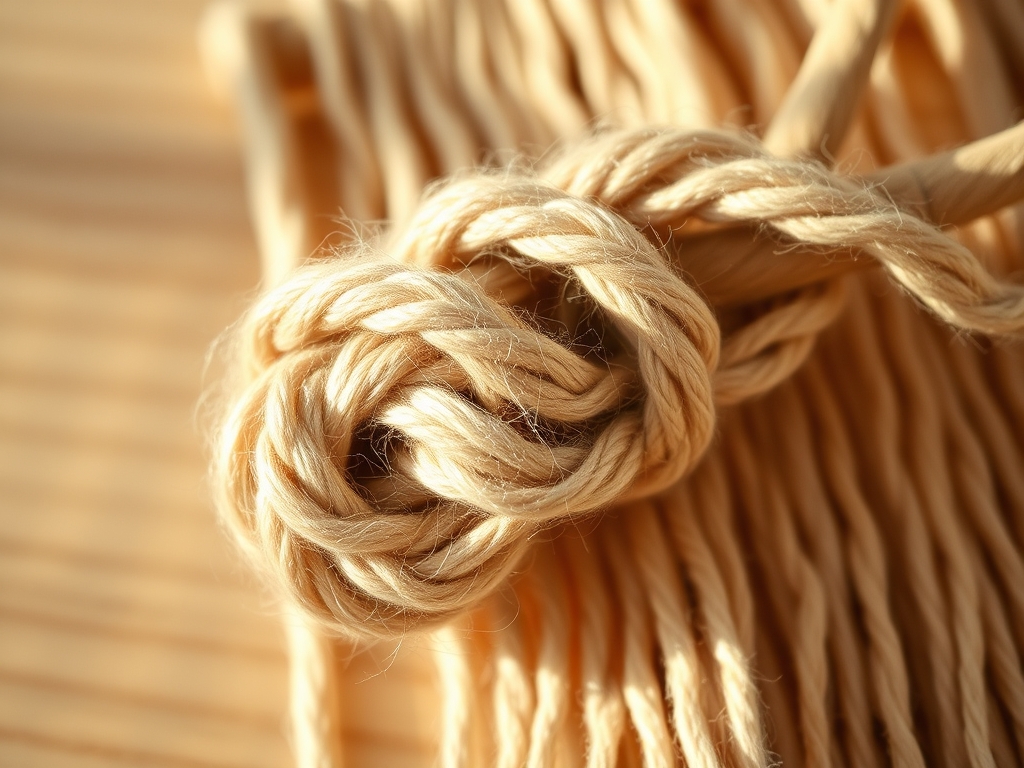
Grab your favorite mug and clear the workbench because we are about to dive into the visceral world of fiber physics. There is a specific, electric thrill that happens when you first touch a high-quality hank of wool; it is the tactile sensation of potential energy waiting to be converted into structural art. Today, we are mastering Rhythmic Tapestry Knots to create wall pockets that are as sturdy as they are beautiful. We are not just looping string here. We are manipulating the tensile strength of protein and cellulose fibers to build a three-dimensional vessel. When you pull that first lark's head knot tight, you are engaging with the friction coefficients of the yarn, ensuring that the internal grip is strong enough to hold the weight of whatever treasures you tuck inside later. We are looking for that perfect balance between elasticity and rigidity. If the yarn is too soft, the pocket slumps; if it is too brittle, the knots will snap under the pressure of a tight gauge. Let us get our hands on some texture and start building.
THE STUDIO KIT
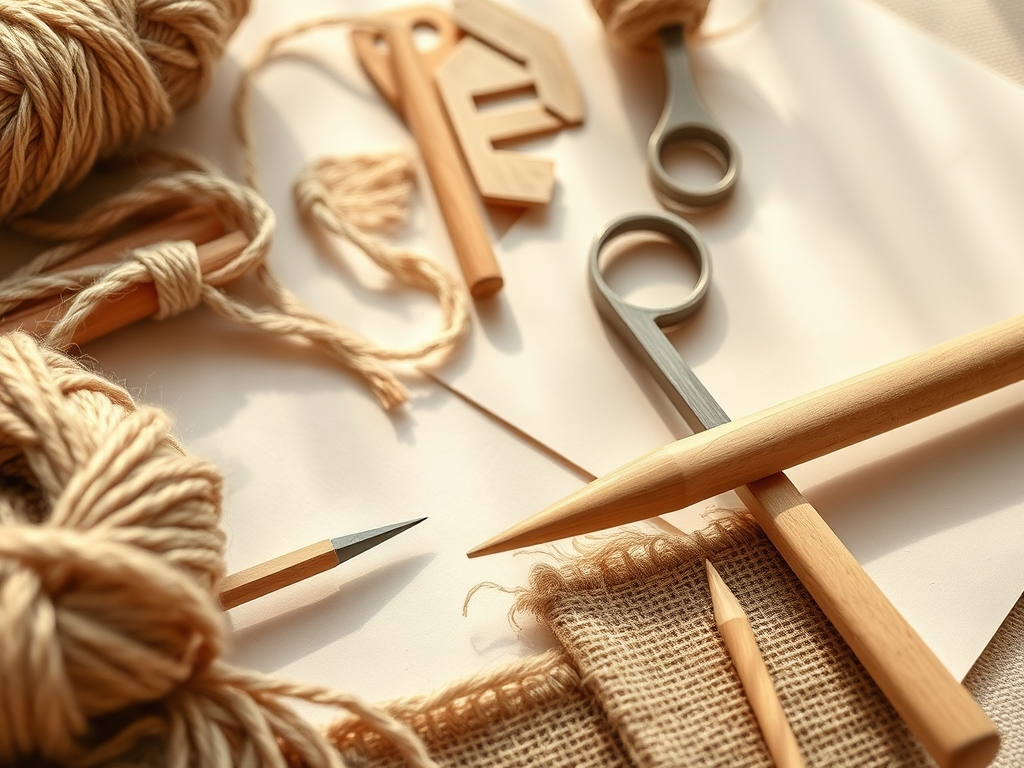
To execute these Rhythmic Tapestry Knots with professional precision, you need a kit that respects the integrity of the fiber. Start with a solid foundation: a copper pipe or a sanded oak dowel. I prefer copper because the smooth surface allows the yarn to glide during the initial mounting phase, reducing unwanted abrasion. You will need a pair of high-carbon steel fabric shears for clean, surgical cuts that prevent fraying at the tips. Keep a bone folder nearby to burnish your knots and ensure they sit flush against one another. For measurements, put away the flimsy plastic tape and use a pair of calipers or a stainless steel ruler to check your knot density.
Material Substitutions: If you cannot find high-twist wool, look for a recycled cotton cord with a polyester core. The synthetic core provides the necessary structural integrity that pure cotton often lacks, preventing the "stretch out" effect over time. For a more organic look, hemp cord offers incredible durability, though its high lignin content makes it rougher on the hands. Always check the ply of your yarn; a four-ply construction is the gold standard for wall pockets because the internal twisting provides a natural resistance to gravity.
THE TEMPO
The "Maker's Rhythm" is a real neurological state where your hands move faster than your conscious thought. For this project, expect a total production time of approximately five to seven hours. The first hour is the "Set-Up Phase," where you measure and cut your warp threads. This requires extreme focus to ensure every strand is uniform in length. The next three to four hours are the "Flow Phase." This is where the Rhythmic Tapestry Knots happen. Once you memorize the over-under-through cadence, your muscle memory takes over. The final hour is the "Finishing Phase," where you secure the pocket base and trim the fringe. Respecting this tempo prevents hand fatigue and ensures that your tension remains consistent from the top of the piece to the bottom.
THE CORE METHOD
1. Mounting the Foundation Warp
Fold your primary yarn lengths in half and secure them to your dowel using a series of lark's head knots. Ensure that the tension is identical across the entire width of the dowel. Use your bone folder to push the knots together until no light passes between them.
Mastery Tip: This step relies on the physics of friction. By tightening the knot against the smooth surface of the dowel, you create a mechanical bond. If the knots are loose, the weight of the wall pocket will cause the entire piece to sag, ruining the geometric alignment.
2. Establishing the First Row of Knots
Begin your first row of square knots, which serve as the "spine" of the wall pocket. Use a consistent lead hand to ensure the "twist" of the knot always faces the same direction. This creates a uniform visual surface and distributes the load evenly across the fibers.
Mastery Tip: Notice the tensile strength of your yarn here. If you pull too hard, you compress the air pockets within the wool, making the yarn thinner and changing the gauge. Aim for "firm but bouncy" to maintain the yarn's natural loft.
3. Creating the Pocket Depth
To transition from a flat tapestry to a pocket, you will introduce "filler" cords. By knotting around a central core of yarn, you create a raised, three-dimensional rib. This is where the Rhythmic Tapestry Knots become structural. You are essentially building a fabric wall that can support its own weight.
Mastery Tip: This is an exercise in structural integrity. The filler cords act like the rebar in concrete. They provide the internal skeleton that prevents the pocket from collapsing inward when it is under load.
4. Securing the Base Seam
The bottom of the pocket is the highest stress point. Use a double half-hitch knot to create a horizontal bar that seals the pocket. This knot is incredibly dense and acts as a mechanical stop for the vertical threads.
Mastery Tip: Use your calipers to check that the distance between the top of the pocket and the base seam is consistent on both the left and right sides. Even a three-millimeter deviation will cause the pocket to hang crookedly.
5. Burnishing and Finishing
Once the knots are complete, use your shears to trim the fringe at a 45-degree angle. This prevents the ends from unraveling too quickly. Use a fine-tooth comb to brush out the remaining yarn, revealing the individual fibers.
Mastery Tip: Brushing the yarn increases the surface area, which allows the fibers to "lock" together through microscopic hooks. This process, similar to light felting, adds a final layer of stability to your fringe.
THE TECHNICAL LEDGER
Maintenance & Longevity: Wool and cotton are porous materials that trap dust and oils. To keep your tapestry pristine, use a soft-bristled brush once a month to remove particulates. Avoid hanging the piece in direct sunlight, as UV rays break down the molecular bonds in the dye, leading to fading and fiber brittleness.
Material Variations:
- Sustainable: Organic bamboo cord offers a beautiful sheen but has high "drape," meaning it will stretch more than wool.
- Recycled: T-shirt yarn is excellent for large-scale pockets, though the gauge can be inconsistent.
- Premium: Merino wool roving adds incredible softness but requires a "core" thread to prevent the knots from pulling apart.
The Correction:
- The Slump: If the pocket bows in the middle, your tension was too loose. Fix this by using an awl to carefully tighten each knot in the row, starting from the outside and moving in.
- The Spiral: If your knots are twisting, you are likely using the same lead hand for every half-knot. Fix this by alternating your "over" cord every single time.
- Fraying Ends: If the yarn is splitting, your shears are dull. Use a rotary cutter on a self-healing mat to get a fresh, clean edge.
Studio Organization: Store your yarn in airtight bins with cedar blocks to prevent moth damage. For the finished project, if you need to transport it, roll it around a cardboard tube rather than folding it. Folding creates "stress creases" in the fiber that can permanently weaken the knots.
THE FINAL REVEAL
Look at that masterpiece! Your wall pocket is a triumph of engineering and aesthetic flair. The Rhythmic Tapestry Knots create a stunning, repetitive pattern that draws the eye, while the structural density ensures it is a functional piece of home organization. The way the light hits the peaks and valleys of the knots gives the piece a dynamic energy that flat weaving just cannot match. You have successfully turned a pile of string into a durable, three-dimensional vessel using nothing but your hands and some clever physics. Hang it up, step back, and admire the perfect tension and vibrant colors you have brought to life.
STUDIO QUESTIONS
What is the best yarn for beginners?
A 4mm or 5mm cotton cord is ideal. It has low elasticity and high visibility, making it easy to see your Rhythmic Tapestry Knots and correct mistakes before they become permanent structural issues.
How do I prevent hand cramps?
Maintain an ergonomic posture and use a vertical mounting stand. This allows you to keep your wrists straight, reducing the strain on your carpal tendons during long periods of repetitive knotting.
Can I wash my wall pocket?
Spot clean only with a damp cloth and mild detergent. Submerging the piece in water can cause the fibers to swell and distort the knot tension, potentially ruining the pocket's shape permanently.
Why are my knots uneven?
Uneven knots usually stem from inconsistent "pull" strength. Use a tension gauge or a simple ruler to check the width of your knots every few inches to ensure your physical output remains steady.