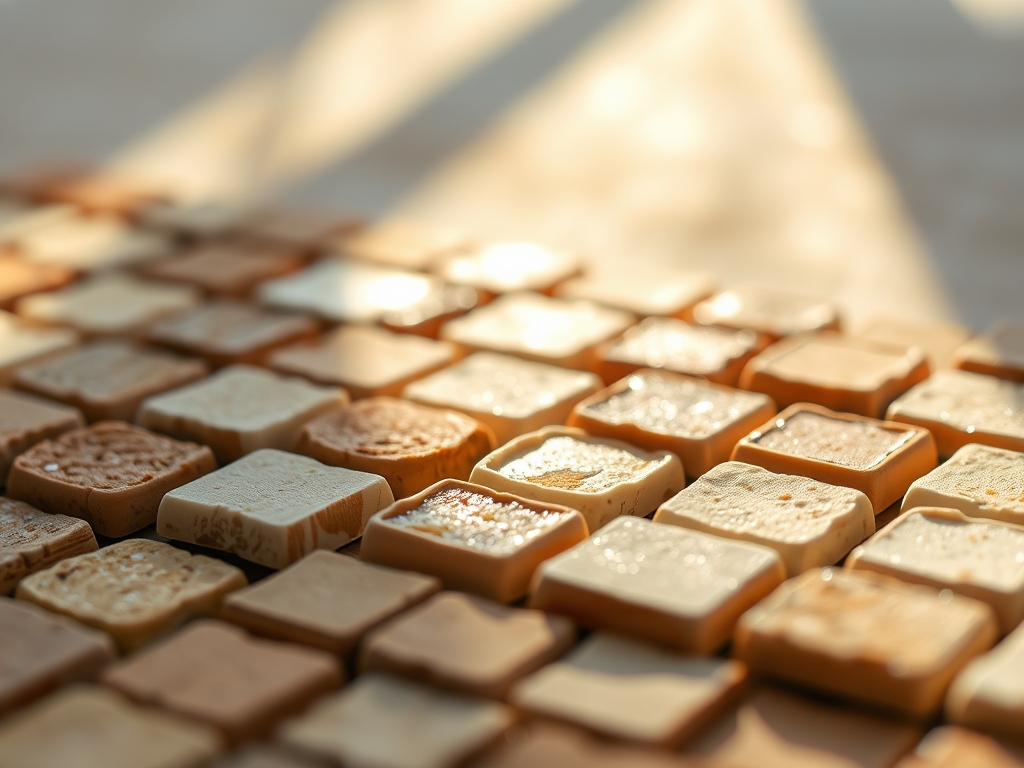
Imagine the grit of crushed porcelain beneath your fingertips and the cool, unyielding weight of a glass tessera. We are diving deep into the world of Mosaic Tiling Patterns today; it is not just about gluing pretty shards to a board. It is a high stakes game of structural integrity and visual rhythm where every fracture point matters. We are going to transform raw, jagged materials into a geometric masterpiece that defies the chaos of its individual parts. Grab your safety goggles because we are about to turn math into art.
The tactile experience of mosaic work is rooted in the physics of adhesion and the tension between disparate materials. When you run your hand over a finished surface, you are feeling the result of meticulous leveling and the chemical bond of mortar. It is a sensory overload of sharp edges meeting smooth glazes. We are not just decorating; we are engineering a surface that can withstand the elements while looking absolutely sharp. Let us get our hands dirty and our brains engaged.
THE STUDIO KIT

To master these layouts, your toolkit must be as precise as a laboratory. You will need wheeled glass nippers for controlled fractures and a diamond grit rubbing stone to smooth out the edges of your cuts. For the substrate, use a cement backer board or a high density marine plywood to ensure the base does not warp under the moisture of the thin set. You will also need notched trowels to create the perfect bed for your tiles; the ridges allow air to escape, preventing hollow spots that lead to cracking.
Material substitutions are a great way to pivot based on your budget or aesthetic. If premium smalti glass is out of reach, you can substitute with vitreous glass tiles or even upcycled ceramic dinnerware. For a more organic garden look, consider using river stones or pebbles, though these require a thicker mortar bed due to their irregular depth. Always keep a digital caliper on hand to measure the gauge of your materials; consistency in height is the secret to a professional, flush finish that avoids trip hazards in garden paths.
THE TEMPO
The rhythm of a mosaic project is dictated by the curing times of your adhesives. Phase one is the design and dry fit, which can take anywhere from three to six hours depending on the complexity of your geometric layout. This is the intellectual heavy lifting where you calculate the interstice gaps between tiles. Do not rush this; your layout determines the structural flow of the entire piece.
Phase two is the setting phase, which takes about four hours of active work but requires a full twenty four hour cure time. This is followed by the grouting phase, which is a fast paced ninety minute window before the grout begins to set. The "Maker's Rhythm" is all about patience during the drying cycles and intense focus during the application windows. You cannot fight the chemistry of the mortar; you have to dance with it.
THE CORE METHOD
1. Substrate Preparation and Priming
Before a single tile touches the surface, you must ensure the substrate is chemically ready to bond. Use a diluted PVA solution to prime porous surfaces like wood or concrete. This prevents the substrate from wicking the moisture out of your thin set too quickly, which would result in a brittle, weak bond.
Mastery Tip: This process relies on capillary action. By pre sealing the surface, you ensure the moisture stays within the adhesive long enough for the chemical hydration process to complete, maximizing the tensile strength of the bond.
2. Establishing the Geometric Axis
Use a chalk line or a laser level to mark your horizontal and vertical axes. For geometric Mosaic Tiling Patterns like the herringbone or hexagonal grid, your first row must be perfectly square. Even a one millimeter deviation at the center will magnify into a massive gap by the time you reach the perimeter.
Mastery Tip: Use a T-square to verify your angles. The physics of Euclidean geometry means that any error in the initial "seed" tile will propagate through the entire layout, a phenomenon known as error accumulation.
3. The Thin Set Application
Apply your thin set using a 3/16 inch notched trowel. Hold the trowel at a consistent forty five degree angle to create uniform ridges. This ensures that when you press the tile down, the ridges collapse and provide one hundred percent coverage without squeezing excess mortar into the grout lines.
Mastery Tip: This technique utilizes displacement physics. By creating ridges, you provide a path for air to escape, which creates a vacuum effect that "sucks" the tile into place, ensuring it stays level during the curing process.
4. Precision Nipping and Shaping
When you encounter the edges of your geometric pattern, you will need to shape your tiles. Use your wheeled nippers to apply pressure at a single point. For complex curves, use a score and snap method with a glass cutter to ensure the break follows the grain of the glass.
Mastery Tip: Glass is an amorphous solid that breaks along lines of internal stress. By scoring the surface, you create a fault line that directs the kinetic energy of the nip, resulting in a clean, predictable fracture.
5. Grout Integration and Compression
Once the tiles are set, spread your grout using a rubber float. Push the grout deep into the crevices at a diagonal angle to the tile lines. This prevents the float from "diving" into the gaps and pulling the grout back out.
Mastery Tip: Grout acts as a compressive buffer. It locks the tiles into a monolithic structure, distributing mechanical loads across the entire surface rather than allowing individual tiles to take the brunt of the impact.
6. The Initial Polish and Haze Removal
After the grout has sat for about twenty minutes, use a hydrophilic sponge that is barely damp to wipe away the excess. Do not use too much water, or you will wash out the pigment and weaken the grout structure.
Mastery Tip: This is a delicate balance of surface tension. You want enough moisture to lift the grout film from the non porous tile surface without penetrating the porous grout lines and diluting the chemical bond.
7. Final Buffing and Sealing
After twenty four hours, use a microfiber cloth to buff away the remaining grout haze. For garden art, apply a penetrating silane sealer. This will protect the grout from moisture and UV degradation without changing the appearance of the tiles.
Mastery Tip: Sealers work through molecular hydrophobicity. They line the pores of the grout with a water repellent layer that prevents the "freeze-thaw" cycle from expanding and cracking your beautiful mosaic.
THE TECHNICAL LEDGER
Maintenance is the key to longevity. For outdoor garden art, inspect the grout lines annually for any signs of hairline fractures. If you spot one, use a dremel with a diamond bit to carefully remove the damaged section and reapply grout. This prevents water from seeping behind the tiles and causing delamination.
Material variations can drastically change the vibe. Recycled glass offers a sustainable, matte finish that diffused light beautifully. Premium smalti has a high refractive index, giving your mosaic a glowing quality. If you are working with porous stones, you must pre seal them before grouting to prevent "grout staining," where the pigment leaches into the stone itself.
The Correction:
- Uneven Tile Height: If a tile is too low, use a small "buttering" of thin set on the back of the tile to boost its profile.
- Grout Cracking: This usually means the mix was too dry. Scrape it out and reapply with a slightly more plastic consistency.
- Adhesive Bleed: If mortar squeezes up between tiles, use a dental pick or an awl to clear the space before it hardens; otherwise, your grout will look blotchy.
Store your mosaic supplies in a temperature controlled environment. Mortar and grout are sensitive to humidity; once the bag is opened, store it in an airtight five gallon bucket to prevent the powder from clumping and losing its reactive properties.
THE FINAL REVEAL
Look at that! You have successfully navigated the complex physics of Mosaic Tiling Patterns to create something that is both structurally sound and visually stunning. The way the light catches the different angles of the glass and the crisp, clean lines of your geometric layout is nothing short of professional. You did not just make a craft; you engineered a piece of art that will stand the test of time. Your garden is about to become the most sophisticated gallery in the neighborhood.
STUDIO QUESTIONS
How do I prevent my mosaic tiles from slipping?
Ensure your thin set has a "heavy cream" consistency. Use a notched trowel to create ridges that provide mechanical suction. For vertical surfaces, use a high tack adhesive or blue painter's tape to hold pieces until the initial set occurs.
Can I use regular plywood for outdoor mosaics?
No; regular plywood will delaminate when exposed to moisture. Always use cement backer board or marine grade plywood. These materials have the necessary dimensional stability to resist warping, which would otherwise cause your tiles to pop off and crack.
What is the best way to cut circular shapes?
Use wheeled nippers to "nibble" away small increments around the perimeter. For a perfect circle, use a diamond hole saw on a drill press. Always keep the surface wet to reduce heat friction and prevent the tile from shattering.
How do I choose the right grout color?
Grout acts as a visual frame. A contrasting color highlights the individual shapes and your "andamento" or flow. A matching color creates a more monolithic, seamless look. Always do a small test patch to see how the color dries.
Why is my grout turning white or chalky?
This is likely efflorescence, caused by excess water during the cleaning phase or minerals in the water. Use distilled water for mixing and avoid over saturating the sponge. If it occurs, a mild acid wash can often remove the salt deposits.