Imagine the scent of freshly cut cedar mixing with the metallic tang of a cold jeweler's saw. Your fingers graze the grain; it is a tactile map of resistance and potential. To master your craft, you must unlock Creative Trance Techniques that bridge the gap between conscious effort and pure, unadulterated flow.
When you enter this state, the ticking clock vanishes. Your hands move with a precision that feels automated, yet deeply intentional. It is not magic; it is the physiological alignment of your nervous system with the physical properties of your medium. Whether you are carving, weaving, or soldering, the goal is to reach a point where the tool becomes a literal extension of your nervous system. By focusing on the tensile strength of your fibers or the thermal conductivity of your metals, you anchor your brain in the present moment. This sensory grounding is the secret door to the "deep work" zone where hours feel like minutes and the quality of your output skyrockets.
THE STUDIO KIT
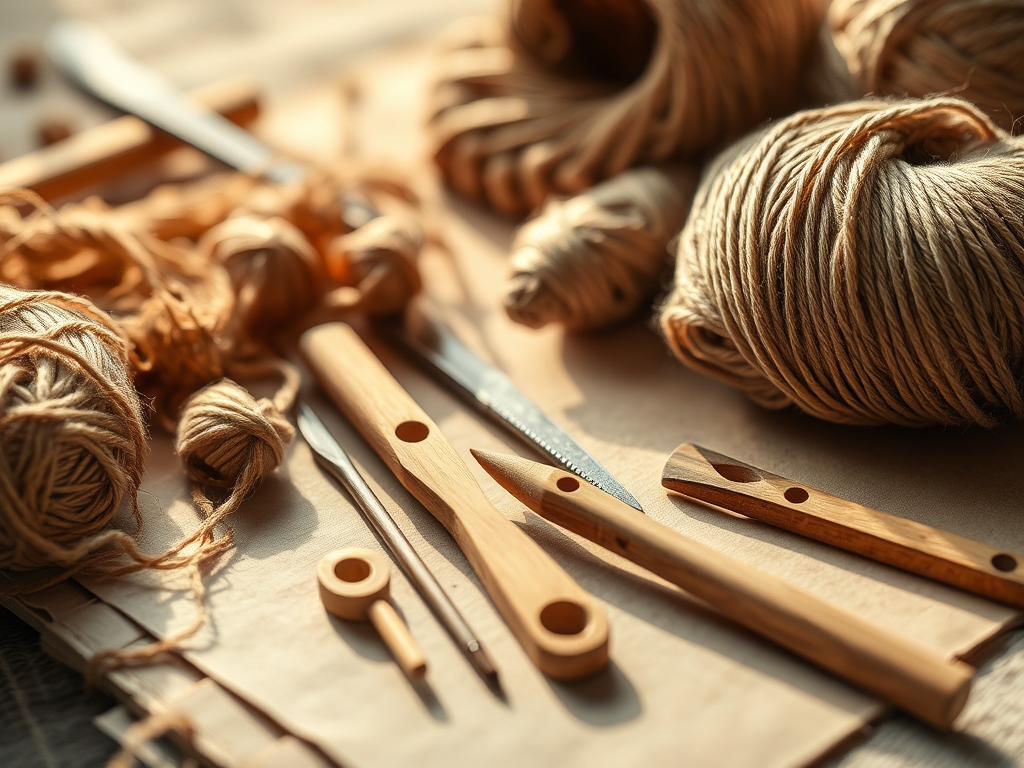
To facilitate a seamless flow state, your workspace must be an ergonomic masterpiece. You will need a high-quality caliper for precision measurements; even a half-millimeter deviation can break your mental momentum. Keep a bone folder or a burnishing tool nearby to manipulate surfaces without causing structural fatigue. For material-heavy projects, ensure you have a rotary cutter with a fresh tungsten carbide blade to maintain clean edges without the jagged resistance of a dull edge.
Your primary material should be high-density; think top-grain leather, acid-free 300gsm paper, or hardwood blanks with a tight, linear grain. If you cannot source premium materials, your "Material Substitutions" include high-ply cardstock or reclaimed oak, provided you account for the increased porosity and potential for splintering. Always keep a specialized adhesive, such as a cyanoacrylate resin or a pH-neutral PVA, to ensure your bonds have the necessary shear strength to withstand the assembly process.
THE TEMPO
The Maker's Rhythm is a three-act play that dictates your neurological engagement. Phase one is the Activation Phase, lasting roughly forty-five minutes. This is where you handle the "grunt work" like measuring and rough cutting. Your brain is still settling into the task, so use this time to synchronize your breathing with the repetitive motion of your awl or jeweler's saw.
Phase two is the Flow Peak, which can last anywhere from two to four hours. This is the "Trance" window where your fine motor skills are at their most acute. During this time, avoid all external interruptions; even a single notification can shatter your cognitive load capacity. Phase three is the Refinement Phase, a sixty-minute wind-down where you focus on finishing touches like sanding or polishing. This phase is crucial for stress relief in the material, allowing the piece to settle into its final form without sudden temperature or pressure shifts.
THE CORE METHOD
1. Establish the Sensory Anchor
Begin by handling your material with your eyes closed. Feel the coefficient of friction as your skin moves across the surface. By isolating your sense of touch, you prime your brain to detect subtle irregularities that your eyes might miss. This sensory priming reduces the "start-up" friction often found in complex builds.
Mastery Tip: This technique utilizes haptic feedback to calibrate your motor cortex. By understanding the material's density before you begin, you instinctively apply the correct amount of newtons of force when cutting or shaping, preventing over-extension and material failure.
2. Calibrate Your Tool Geometry
Before the first cut, check the alignment of your blades or the tension of your strings. If you are using an oscillating tool, ensure the attachment is seated perfectly to minimize vibration. Excess vibration causes hand fatigue, which is the primary enemy of the creative trance.
Mastery Tip: Tool calibration is about managing mechanical resonance. When a tool is properly tuned, the energy transfer from the motor to the material is maximized, reducing the physical strain on your wrist and allowing for longer, more focused sessions without the onset of carpal tunnel symptoms.
3. Implement the Micro-Iteration Loop
Instead of looking at the finished project, focus entirely on the next three millimeters of work. If you are stitching, focus on the exit angle of the needle. If you are carving, focus on the shaving thickness. This hyper-fixation prevents the "overwhelmed" response that triggers the brain's desire to procrastinate.
Mastery Tip: This leverages the Zeigarnik Effect, where the brain remains engaged with an incomplete task. By focusing on micro-goals, you maintain a constant stream of dopamine rewards, which keeps the prefrontal cortex locked into the creative process.
4. Optimize the Work Surface Height
Your desk height should allow your elbows to rest at a ninety-degree angle. Use a self-healing cutting mat to provide a consistent level of "give" under your tools. A surface that is too hard will reflect energy back into your joints; a surface that is too soft will compromise your dimensional accuracy.
Mastery Tip: Ergonomic alignment ensures optimal blood flow to the extremities. When your posture is correct, your brain receives a steady supply of oxygenated blood, which is essential for maintaining the high-level cognitive function required for intricate design work.
5. Manage Material Hydration and Temperature
Organic materials like wood, leather, and clay are sensitive to hygroscopy, meaning they absorb moisture from the air. Keep your studio at a consistent humidity level. If a material becomes too dry, its brittleness increases; if it is too damp, its tensile strength drops, leading to warping.
Mastery Tip: This is the science of dimensional stability. By controlling the environment, you ensure that the pieces you cut at the beginning of your trance will still fit perfectly with the pieces you cut four hours later, despite any atmospheric changes.
6. The Rhythmic Finishing Stroke
As you reach the end, use long, continuous motions for sanding or polishing. This is where you "burnish" the soul into the piece. Use a high-grit abrasive and move with the grain to avoid creating micro-scratches that catch the light and ruin the visual flow.
Mastery Tip: Finishing is an exercise in surface tension management. Smooth surfaces have less surface area, making them more resistant to environmental degradation and oxidation over time.
THE TECHNICAL LEDGER
Maintenance & Longevity: To ensure your creation lasts for decades, apply a protective sealant that matches the porosity of the material. For wood, use a polymerizing oil; for metal, a microcrystalline wax; for paper, an archival-grade fixative.
Material Variations:
- Sustainable: Use cork fabric or recycled aluminum for an eco-friendly build with high durability.
- Premium: Grade 5 Titanium or Italian Shell Cordovan offer unmatched longevity and a superior tactile experience.
The Correction:
- The Over-Cut: If you slip with your rotary cutter, do not use tape. Use a structural adhesive mixed with "dust" from your material to create a seamless, load-bearing filler.
- Grain Tear-Out: If the wood splinters, dampen the area to swell the fibers, then use a razor-sharp chisel to shave the area flat.
- Adhesive Bloom: If your glue leaves a white residue, use a de-bonder or a light application of isopropyl alcohol to dissolve the excess without damaging the substrate.
Studio Organization: Store your projects in polypropylene bins with desiccant packets. This prevents UV degradation and moisture-induced swelling while you are away from the bench.
THE FINAL REVEAL
There is nothing quite like the moment you step out of the trance and see the finished object resting on your bench. It is more than just a "thing"; it is a physical manifestation of your focused energy. The edges are crisp, the joints are seamless, and the finish has that professional, high-end glow. You have successfully navigated the complexities of material physics and neurological flow to create something that will stand the test of time. Your hands might be tired, but your spirit is absolutely buzzing with the satisfaction of a master maker.
STUDIO QUESTIONS
How do I start a creative trance?
Begin with a repetitive, low-stakes task like sanding or sorting. This rhythmic motion lowers your heart rate and signals to your brain that it is time to transition from "analytical mode" into "creative flow mode."
What tools are best for long sessions?
Prioritize tools with ergonomic grips and high-carbon steel components. Tools that stay sharp longer reduce the physical force required, which prevents muscle fatigue and allows your mind to stay focused on the artistic details.
Can I listen to music during a trance?
Yes, but stick to ambient or lo-fi tracks without lyrics. Vocals engage the language processing centers of your brain, which can compete with the spatial reasoning required for high-level crafting and assembly.
How do I fix a mistake without breaking my flow?
Keep a "correction kit" of tweezers, rapid-set glue, and fine-grit sandpaper within arm's reach. Having the fix ready prevents the "frustration spike" that usually kicks you out of your creative trance.