Imagine the scent of scorched pine and wet stone filling your studio as you grind a solid soot stick against a slate suzuri. This is not just painting; it is a physical interrogation of carbon and water. To master Meditative Brush Strokes, you must first understand that your brush is a precision instrument of fluid dynamics. The tactile resistance of the animal hair against the tooth of the paper creates a micro-vibration that travels up your arm and into your core. We are looking for that perfect moment where the ink reaches a critical saturation point, allowing it to bleed into the fibers without losing its structural integrity. It is a dance of tension and release. You are not just moving a tool; you are directing a flow of liquid carbon through a porous landscape. This practice demands total presence, turning every flick of the wrist into a calculated expression of physics and soul.
THE STUDIO KIT
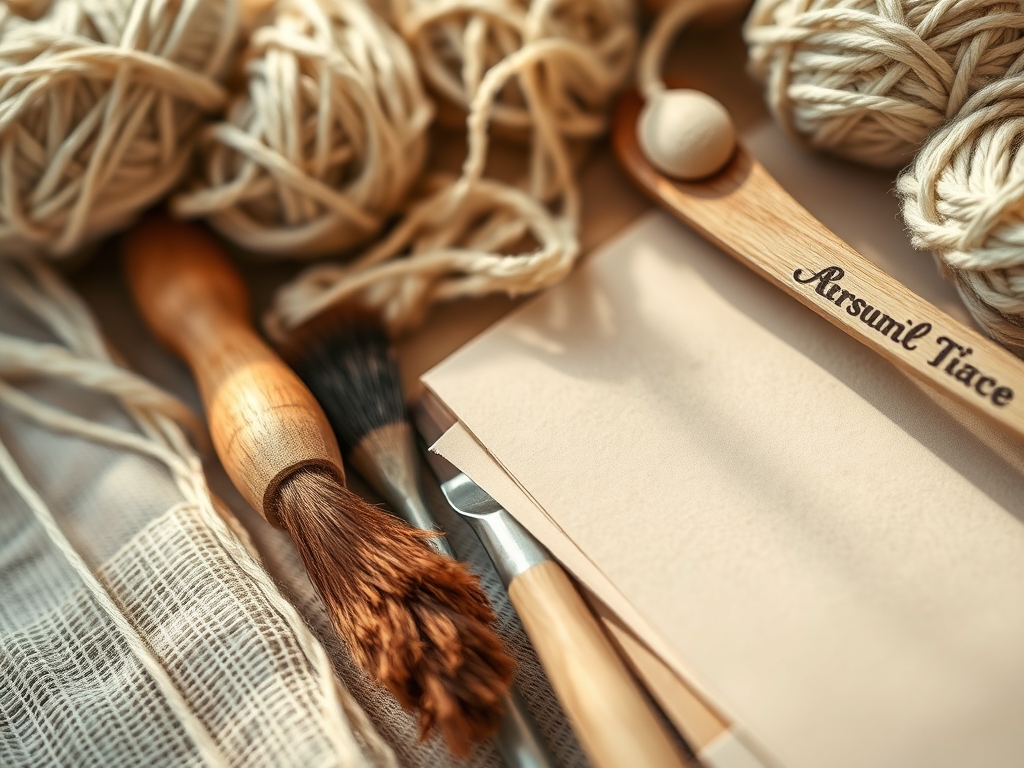
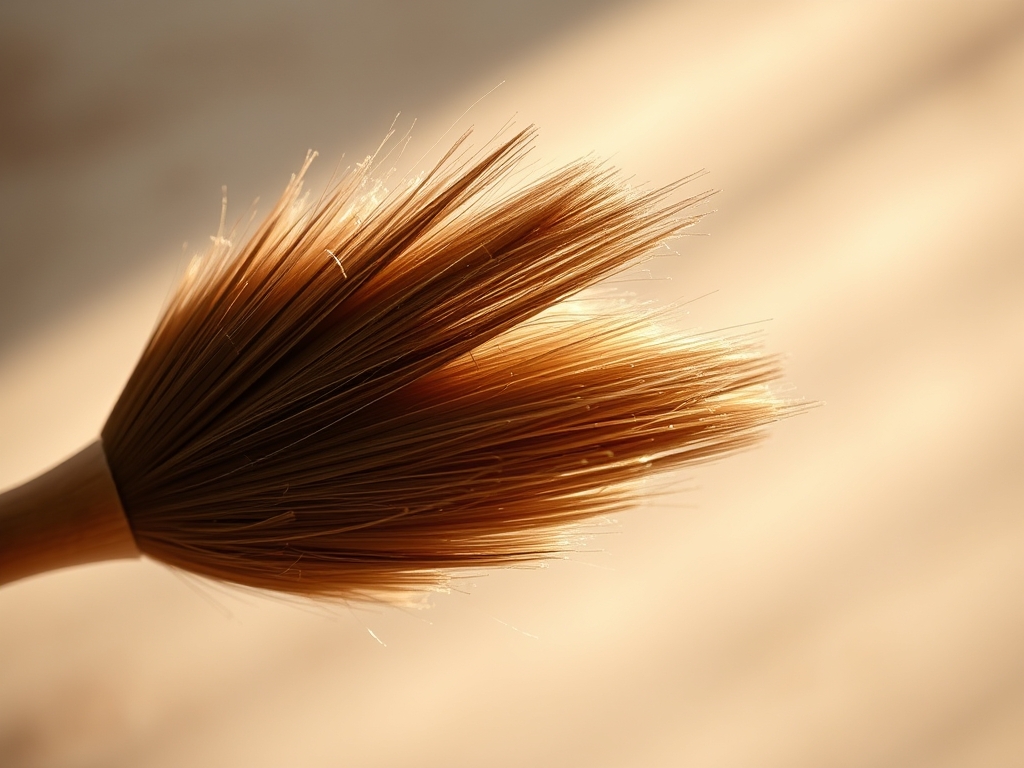
To achieve professional results, you need a kit that respects the laws of **capillary action**. Your primary tool is the Fude brush, traditionally crafted from wolf, goat, or rabbit hair. These fibers are chosen for their specific **tensile strength** and ability to hold a massive reservoir of ink while maintaining a needle-sharp point. You will also need a solid ink stick (Sumi) and an ink stone (Suzuri) made of volcanic rock to grind the pigment to a specific **micron size**. The paper, or Hanshi, is usually unsized rice paper, which is incredibly **porous** and reactive to moisture.
For those looking for Material Substitutions, you can swap the traditional ink stone for a high-quality liquid Sumi ink, though you lose the meditative grinding process. If you cannot find authentic Hanshi, a high-grade 70lb newsprint or a very thin, untextured watercolor paper can work, though the absorption rate will differ. You might even use a bone folder to crisp the edges of your paper before you begin, ensuring it lays perfectly flat on your felt mat.
THE TEMPO
The Maker's Rhythm in Sumi-e is divided into three distinct phases. First is the Preparation Phase (15 minutes), where you grind the ink. This is a slow, rhythmic movement that lowers your heart rate and prepares your nervous system. Next is the Execution Phase (30 to 60 minutes), where the actual Meditative Brush Strokes happen. This phase is fast and decisive; once the brush touches the paper, there is no undoing the mark. Finally, the Curing Phase (2 hours) allows the carbon particles to bond permanently with the cellulose fibers of the paper as the water evaporates.
THE CORE METHOD
1. The Vertical Bone Stroke
Hold your brush perfectly perpendicular to the paper. This is the foundation of all Meditative Brush Strokes. By maintaining a 90-degree angle, you ensure that the gravity-fed ink flow is even across the entire diameter of the brush tip. Move your entire arm from the shoulder, not the wrist, to create a line of consistent thickness.
Mastery Tip: This technique relies on surface tension. If you move too slowly, the ink will pool and create a "blob" due to the paper's high absorption rate. If you move too fast, you get "flying white," where the ink fails to fill the microscopic valleys of the paper texture.
2. The Bamboo Leaf Flick
Start with the tip, press down to splay the bristles, and then lift as you sweep away. This creates a tapered shape that mimics a leaf. The goal is to control the deformation of the brush head. As you press, the bristles spread, increasing the surface area and the amount of ink deposited.
Mastery Tip: The science here is elastic recovery. A high-quality brush will spring back to its original shape instantly. If your brush stays splayed, it lacks the necessary fiber density or internal spring.
3. The Rock and Mist Wash
Dip only the very tip of a wet brush into dark ink, then stroke it across the paper to create a gradient. This is the "Bokashi" technique. It relies on hydrophilic diffusion, where the ink naturally travels from areas of high concentration to areas of low concentration within the damp fibers.
Mastery Tip: To prevent the paper from warping, use a heavyweight felt mat underneath. The felt absorbs excess moisture and provides a consistent thermal buffer, preventing the paper from drying unevenly and buckling.
4. The Hidden Tip (Zang Feng)
In this stroke, you "hide" the beginning of the line by starting the brush in the opposite direction before reversing course. This creates a rounded, powerful start rather than a sharp point. It is an exercise in kinetic energy redirection.
Mastery Tip: This stroke tests the shear strength of the paper. By reversing direction, you are layering ink and stress on the fibers. High-quality Hanshi can handle this; cheap paper will pill or tear.
5. The Orchid Blade
This is a long, sweeping stroke that varies in pressure, creating a "nail head" and a "rat tail" end. It requires incredible fine motor control and a steady breath. You are essentially mapping your respiratory rhythm onto the paper.
Mastery Tip: Use a caliper to measure the width of your strokes if you are practicing for consistency. You will find that the width is directly proportional to the downward force applied to the ergonomic handle.
6. The Flying White (Fei Bai)
Use a relatively dry brush and move it rapidly across the paper. The ink will only catch on the highest points of the paper's grain, leaving white streaks behind. This creates a sense of speed and light.
Mastery Tip: This is a study in friction coefficients. The drier the brush, the higher the friction. You must balance the speed of the stroke with the viscosity of the remaining ink to get the perfect "shredded" look.
7. The Centered Tip Circle (Enso)
The Enso is a single, circular stroke representing totality. It must be done in one breath. The challenge is maintaining the rotational alignment of the brush so the bristles do not twist or tangle during the 360-degree turn.
Mastery Tip: Watch the meniscus of the ink at the point of contact. If the circle doesn't close cleanly, it is often due to a drop in fluid pressure as the brush reservoir empties.
THE TECHNICAL LEDGER
Maintenance & Longevity: Never leave your brushes sitting in water; this destroys the adhesive bond in the ferrule. Rinse them in cool water, reshape the head with your fingers, and hang them tip-down to dry. This uses gravity to pull moisture away from the wooden handle, preventing rot and cracking.
Material Variations: For a sustainable twist, use handmade mulberry paper (Kozo), which has longer fibers and higher bursting strength than standard wood-pulp paper. For a premium experience, seek out "Old Ink" sticks that have been aged for decades; the carbon particles in these sticks are finer, resulting in a more lustrous, blue-black finish.
The Correction:
- Bleeding: If the ink spreads uncontrollably, your ink is too thin. Add more soot by grinding the stick longer to increase the pigment-to-water ratio.
- Fraying: If the brush tip splits, you have dried ink in the "heel." Use a specialized brush soap to deep-clean the fibers and restore cohesion.
- Graying: If your blacks look dull, your water may be too hard. Use distilled water to ensure the minerals don't interfere with the carbon's light-absorption properties.
Studio Organization: Store your finished works flat in a portfolios case made of acid-free materials. To prevent degradation from UV light or humidity, keep the portfolio in a climate-controlled area. Use archival glassine paper between layers to prevent ink transfer.
THE FINAL REVEAL
Look at that! You have successfully translated the internal rhythm of your breath into a physical manifestation on paper. The contrast between the deep, velvet blacks and the stark white of the paper is a testament to your mastery of fluid dynamics and spatial awareness. These Meditative Brush Strokes are more than just art; they are a record of your focus and technical precision. Your studio is now a place of high-energy creation and deep, scientific calm. Go ahead, hang that Enso on the wall; you have earned the right to show off that perfect gradient!
STUDIO QUESTIONS
What is the best way to hold the brush?
Hold the brush vertically between your thumb, index, and middle fingers. Keep your grip firm but relaxed to allow for fluid range of motion. The power should come from your shoulder and elbow, not your small wrist joints.
Why does my paper wrinkle when I paint?
Wrinkling occurs due to hygroscopic expansion, where paper fibers swell when wet. To minimize this, use a felt backing mat and control your water-to-ink ratio. You can also "stretch" the paper afterward using a traditional mounting technique.
How do I get the perfect ink consistency?
Grind the ink stick in a circular motion on the stone with a small amount of water. You are looking for a viscosity similar to heavy cream. It should coat the stone smoothly and appear "blacker than black" in the well.
Can I use synthetic brushes for Sumi-e?
Synthetic fibers often lack the porosity and "belly" of natural hair, meaning they cannot hold as much ink. This leads to frequent breaks in your Meditative Brush Strokes. For authentic results, natural animal hair is technically superior for fluid retention.