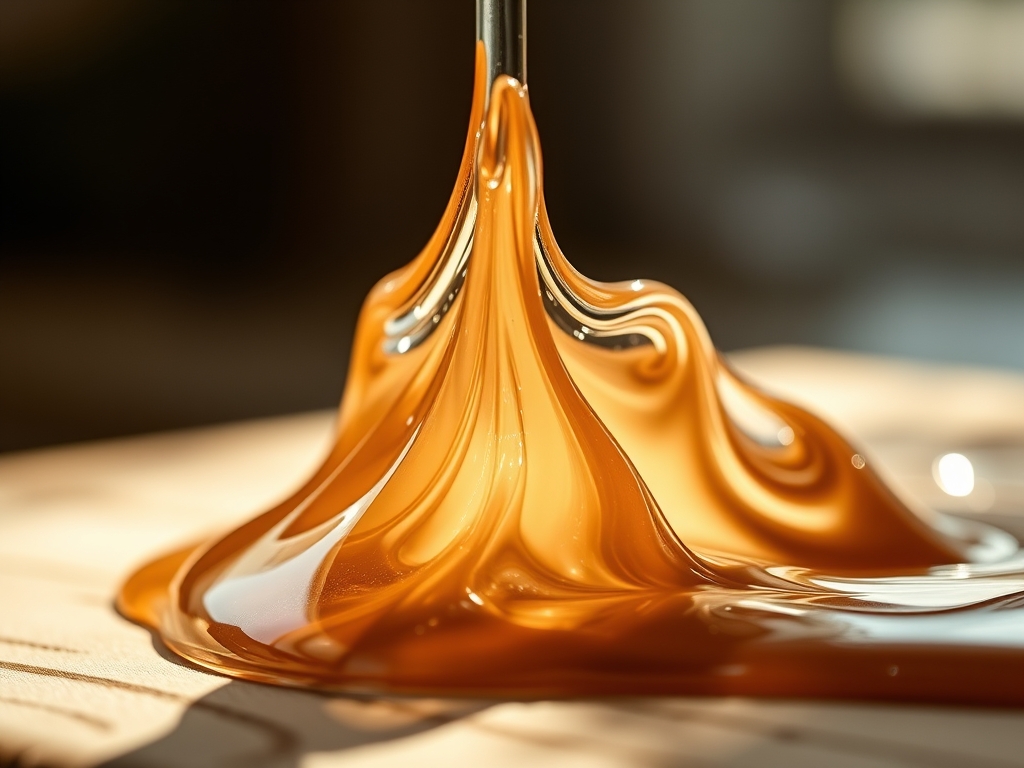
Imagine the tactile thrill of a liquid mirror sliding across a canvas. You are standing in the studio; the air smells faintly of polymer and fresh ambition. Your heart skips as you tilt the board; watching the pigment stretch and collide in a beautiful display of Fluid Acrylic Pouring. This is not just art. This is a high stakes game of molecular physics where you control the chaos.
Every drop of paint holds a specific specific gravity; which dictates whether it will float like a dream or sink like a stone. When you mix your mediums; you are essentially engineering a suspension that balances viscosity against the pull of gravity. The goal is a surface so smooth it reflects your grin right back at you. We are going to master the science of the slick; the glossy; and the glorious. Grab your apron; bestie; because we are about to turn your workspace into a laboratory of liquid light.
THE STUDIO KIT (H2)
To achieve professional results; you need more than just "paint." You need a curated selection of materials that respect the laws of fluid dynamics. Start with high-viscosity acrylics for rich pigment loads; but remember that their tensile strength changes once diluted. You will need a pouring medium (like Floetrol or a gloss polymer) to act as a binder; ensuring the film remains flexible and does not crack as it cures.
For your toolkit; reach for a digital scale to measure ratios with surgical precision. Use a stainless steel palette knife for scraping edges and a butane torch to pop micro-bubbles trapped by surface tension. If you are feeling fancy; a digital hygrometer will help you monitor the studio humidity; which is the secret boss of drying times.
Material Substitutions: If you run out of professional pouring medium; a mixture of PVA glue and distilled water can work in a pinch; though it may slightly lower the lightfastness of your piece. Instead of expensive silicone oil; a drop of dimethicone-based hair serum can induce cell formation by lowering the interfacial tension between paint layers.
THE TEMPO (H2)
The "Maker's Rhythm" is a three-act play. Act One is the Prep Phase (45 minutes); where you level your table using a spirit level and mix your colors. This is the most critical stage because uneven surfaces lead to "run-off" that ruins your composition.
Act Two is the Performance (15 minutes). This is the high-energy window where the paint is "open" and workable. Once the evaporation rate begins to skin the surface; you must stop touching it.
Act Three is the Curing Phase (72 hours to 4 weeks). While the paint feels dry to the touch in a day; the polymer chains take weeks to fully cross-link. Respecting this tempo ensures your glossy finish does not turn into a cloudy mess later.
THE CORE METHOD (H2)
1. The Density Gradient Mix
Before pouring; you must calibrate each color. Heavier pigments like Titanium White have a higher molecular weight than organic pigments like Phthalo Blue. Mix your heavy colors with slightly more medium to ensure they do not immediately plummet to the bottom of your cup.
Mastery Tip: This is all about Rayleigh-Taylor instability. When a denser fluid sits on top of a less dense fluid; the heavier one pushes through; creating those iconic "cells" we all crave.
2. The Surface Tension Prime
Apply a "base coat" of thin paint across your entire canvas using a wide foam brush. This reduces the friction between the dry canvas and your pour; allowing the liquid to glide without breaking its capillary bond.
Mastery Tip: A primed surface ensures the paint moves as a unified sheet rather than "rolling" over itself; which prevents the dreaded "muddying" of colors.
3. The Controlled Deposition
Whether you use a "Dirty Pour" or a "Flip Cup"; the way you deposit the paint matters. Use a graduated beaker to ensure your ratios are identical across all cups. Pour slowly to avoid entraining air into the mixture.
Mastery Tip: Lowering the pour height reduces the kinetic energy of the impact; which keeps your color layers distinct rather than blending them into a single brown hue.
4. The Radial Tilt
Gently tilt the canvas in a circular motion. Do not jerk the board. Use your calipers to check the thickness of the paint at the edges; you want a uniform gauge across the entire surface to prevent uneven drying.
Mastery Tip: Tilting stretches the pigment particles. If you stretch them too far; you break the polymer bond; which leads to "crazing" or small cracks in the finish.
5. The Thermal Degassing
Pass your butane torch two inches above the wet surface. The heat reduces the viscosity of the top layer; allowing trapped air bubbles to rise and pop instantly.
Mastery Tip: This is a lesson in thermal expansion. The air inside the bubble expands faster than the paint; forcing the "pop" without scorching the delicate acrylic resins.
6. The Level Curing
Place your piece in a dust-free "drying tent." Use your spirit level one last time. If the table is off by even a fraction of a degree; the paint will migrate overnight; ruining your design.
Mastery Tip: Controlled evaporation is key. If the surface dries too fast while the bottom is wet; the internal vapor pressure will cause the surface to wrinkle.
7. The Gloss Burnish
Once fully cured; apply a high-gloss varnish using a soft taklon brush. This adds a final protective layer with high refractive index; making the colors "pop" as if they were still wet.
Mastery Tip: The varnish fills in microscopic pits on the surface; creating a perfectly flat plane that reflects light in a single direction; known as specular reflection.
THE TECHNICAL LEDGER (H2)
Maintenance & Longevity: To keep your gloss finish pristine; avoid ammonia-based cleaners. A simple microfiber cloth and a gentle breath are all you need to remove dust without scratching the acrylic film.
Material Variations: For a sustainable twist; use recycled wood panels instead of canvas. The lower porosity of wood means you use less paint; though you must seal the wood first to prevent "off-gassing" bubbles.
The Correction:
- Cracking: Caused by drying too fast. Fix by filling cracks with a matching color and re-varnishing.
- Dull Spots: Caused by "sinking" pigments. Fix by applying a "top-up" coat of gloss medium.
- Dust Particles: Use a fine-point tweezer to remove them while wet; or sand them out with 400-grit paper once dry before re-coating.
Studio Organization: Store your finished pours vertically in a temperature-controlled environment. Avoid stacking them directly against each other; as the thermoplastic nature of acrylic can cause them to fuse together over time.
THE FINAL REVEAL (H2)
Look at that! You have successfully navigated the complex world of fluid dynamics and polymer chemistry. Your piece is a shimmering testament to your precision and flair. The way those cells interact and the light bounces off that ultra-glossy finish is nothing short of professional grade. You didn't just "pour paint"; you engineered a masterpiece. Now; go show the world what happens when science meets style!
STUDIO QUESTIONS (H2)
How do I prevent my colors from mixing into mud?
Maintain different viscosities for each color. Heavier pigments should be slightly thicker; while lighter pigments can be thinner. This prevents the colors from churning together during the tilt; preserving the distinct boundaries of your design.
Why is my pour cracking as it dries?
This is usually "crazing" caused by a broken tensile bond. It happens when the top layer dries significantly faster than the bottom layer or if you added too much water; which weakens the acrylic polymer chain.
What is the best way to get large cells?
Use a density gradient. Place a heavy pigment (like white) on top of a lighter one (like yellow) and add a single drop of silicone oil. The oil breaks the surface tension; allowing the bottom color to rise.
Can I use regular craft paint for this?
Craft paint has a lower pigment load and weaker binders. While it works for practice; it lacks the structural integrity needed for a high-gloss; professional finish and may fade or peel over time.