

Close your eyes and run your fingertips across a piece of raw, vegetable tanned leather or the toothy surface of heavy cold press paper. That immediate rush of texture is the foundation of high level making. When we talk about Immersive Craft Spaces, we are not just discussing a tidy desk; we are engineering a sensory cockpit where the physics of the material meets the precision of the hand. You want a studio that breathes with you. Imagine the scent of beeswax used for thread lubrication or the specific acoustic "thwack" of a dead blow hammer hitting a steel punch. These sensory triggers do more than provide ambiance; they ground your nervous system, allowing you to enter a flow state where your spatial reasoning sharpens. Every surface in your zone should serve a purpose, from the grip of a self healing mat to the cool, non reactive surface of a glass tempering plate. We are building a sanctuary for the tactile, where the tensile strength of your fibers and the grain direction of your timber are the only laws that matter.
THE STUDIO KIT
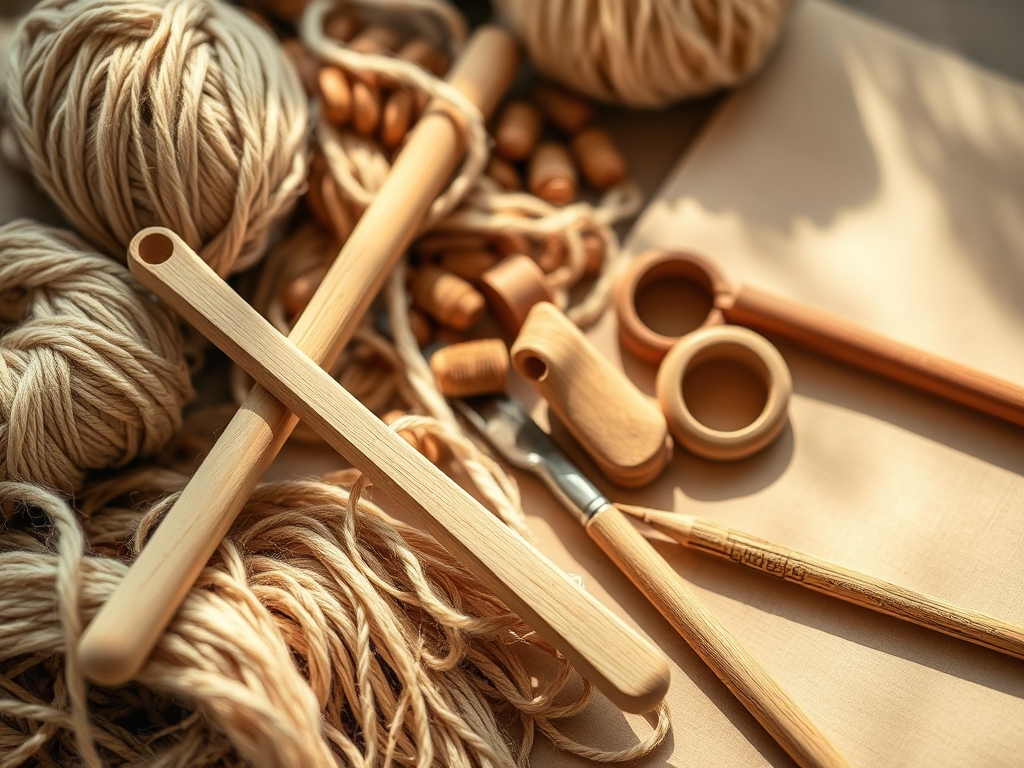
To master the art of sensory design, your kit must balance ergonomic comfort with technical precision. Start with a high quality bone folder for crisp creasing; this tool relies on the smoothness of polished ox bone to compress paper fibers without tearing the surface. You will also need a set of digital calipers to measure material thickness down to the millimeter, ensuring your joinery is flush. For cutting, a rotary cutter with a tungsten carbide blade provides a continuous shear force that prevents the fraying common with traditional shears.
Material Substitutions: If you cannot source premium grade leather, high density cork fabric offers a similar tactile resistance and porous structure. Instead of expensive mahogany for small builds, try black walnut; it possesses a comparable Janka hardness and a tight grain that responds beautifully to a hand plane. For adhesives, if archival methyl cellulose is unavailable, a pH neutral PVA glue provides excellent structural integrity while remaining flexible enough to prevent cracking over time.
THE TEMPO
The Maker's Rhythm is a biological metronome. It is the understanding that different materials have different "breath" times. For example, the hygroscopic nature of wood means it needs to acclimate to your studio's humidity for at least 48 hours before you make your first cut. If you rush this, your dimensions will shift as the internal moisture stabilizes.
The first phase of any project is the Tactile Audit (30 minutes), where you inspect materials for defects or irregular grain patterns. The second phase is The Rough Cut (2 hours), characterized by high energy and broad movements. The third phase is The Refinement (4 to 6 hours), where the tempo slows. This is where you burnish edges and fine tune tolerances. Finally, the Curing Phase (24 hours) is non negotiable. Whether it is paint, glue, or oil finishes, the molecular bonds need time to cross link without interference. Respecting this tempo ensures your finished piece does not just look good; it lasts for decades.
THE CORE METHOD
1. Optimize Lighting for Visual Depth
Position your primary light source at a 45 degree angle to your work surface to create subtle shadows that reveal the texture of your materials. This raking light allows you to see imperfections that flat, overhead lighting would hide. Mastery Tip: This technique utilizes the Schlieren effect principles, where variations in material density or surface level become visible through light refraction, allowing you to catch uneven sanding or air bubbles in a resin pour before they set.
2. Calibrate Haptic Feedback
Choose tools with handles made of natural materials like wood or textured rubber. These provide better haptic feedback than slick plastic. When using an awl to pierce heavy canvas, the vibration traveling through a wooden handle tells your brain exactly when you have cleared the final ply. Mastery Tip: This is known as proprioceptive precision; by reducing the dampening effect of synthetic grips, you increase your hand's ability to sense the material's resistance, preventing over-penetration or tool breakage.
3. Manage Acoustic Resonance
Hard surfaces reflect sound, creating a tinny environment that causes ear fatigue. Introduce "soft" zones using felt pads or heavy curtains to absorb high frequency noise from power tools like an oscillating tool. Mastery Tip: Controlling the reverberation time in your studio reduces cortisol levels, which directly improves fine motor skills. A quieter space allows you to hear the specific "scritch" of a sharp chisel, which sounds different than the "thud" of a dull one.
4. Organize by Kinetic Flow
Arrange your tools in a semi circle based on the frequency of use, keeping your jeweler's saw and burnishing tools within a primary reach zone. This minimizes unnecessary movement and keeps your heart rate steady. Mastery Tip: This follows Link Analysis engineering, which maps the most common transitions between tasks to minimize "travel waste," ensuring your physical energy is reserved for the delicate structural integrity of the build.
5. Control the Olfactory Environment
Use natural finishes like linseed oil or citrus based solvents. Strong chemical fumes are not just unhealthy; they dull your sensory perception over long sessions. Mastery Tip: The olfactory system is closely linked to the brain's memory centers. By using consistent, pleasant scents, you create a conditioned response that triggers deep focus the moment you step into your studio.
6. Master Thermal Regulation
Keep your studio between 68 and 72 degrees Fahrenheit. Cold hands lose dexterity, while excessive heat can cause materials like waxes or glues to behave unpredictably. Mastery Tip: Maintaining a stable ambient temperature ensures that the viscosity of your adhesives remains constant, preventing the "starved joints" that occur when glue becomes too thin and soaks entirely into a porous substrate.
THE TECHNICAL LEDGER
Maintenance & Longevity: To keep your studio at peak performance, wax your cast iron tool surfaces monthly to prevent oxidation. Clean your rotary cutter blades with isopropyl alcohol after every ten cuts to remove adhesive buildup that can cause micro tears in your material.
Material Variations:
- Sustainable: Recycled HDPE plastic sheets can be machined like wood but offer total moisture resistance.
- Premium: Grade A English Bridle leather provides the highest tensile strength for load bearing straps.
- Recycled: Reclaimed barn wood offers a unique patina but requires a moisture meter to ensure it is dry enough for stable construction.
The Correction:
- The Mistake: Over-sanding a joint, creating a gap. The Fix: Mix fine sawdust from the same material with a drop of wood glue to create a structural filler that matches the color perfectly.
- The Mistake: Leather edges "mushrooming" during burnishing. The Fix: You applied too much pressure; lightly sand the edge flat again and use a bone folder with less force and more speed to generate heat through friction.
- The Mistake: Paper buckling after gluing. The Fix: You missed the grain direction. Always ensure the grain of your decorative paper runs parallel to the spine of your project to allow for natural expansion.
Studio Organization: Store your paper and leather flat in acid free drawers. Vertical storage can cause "slumping," where the weight of the material causes permanent warping at the base. Use silica gel packets in tool drawers to maintain a low humidity environment for your high carbon steel tools.
THE FINAL REVEAL
There is nothing quite like the moment you step back and see a project finished within a perfectly calibrated space. The edges are crisp, the joints are seamless, and the entire piece feels balanced in your hand. Because you focused on the sensory physics of the build, the object has a weight and a "soul" that mass produced items lack. You have not just made a thing; you have mastered a process. Your studio is now a high performance engine, and you are the pilot. That feeling of absolute control over your medium is the ultimate maker's high.
STUDIO QUESTIONS
How do I prevent hand fatigue during long sessions?
Switch to tools with ergonomic grips and ensure your work surface is at elbow height. This maintains a neutral wrist position, reducing strain on the carpal tunnel while allowing for maximum downward force during tasks like cutting or burnishing.
What is the best way to check for material squareness?
Use a precision machinist square and a flashlight. Place the square against the edge and shine the light from behind; if any light leaks through the seam, your edge is not perfectly 90 degrees and requires further truing.
Why does my glue keep failing on oily woods?
Tropical woods like teak contain natural oils that repel water based glues. Wipe the mating surfaces with acetone immediately before bonding to strip the surface oils, allowing the adhesive to penetrate the wood fibers effectively.
How can I improve the lighting in a basement studio?
Install LED panels with a Color Rendering Index (CRI) of 90 or higher. This ensures that the colors you see in your studio are accurate to natural daylight, which is vital for matching thread or paint pigments accurately.